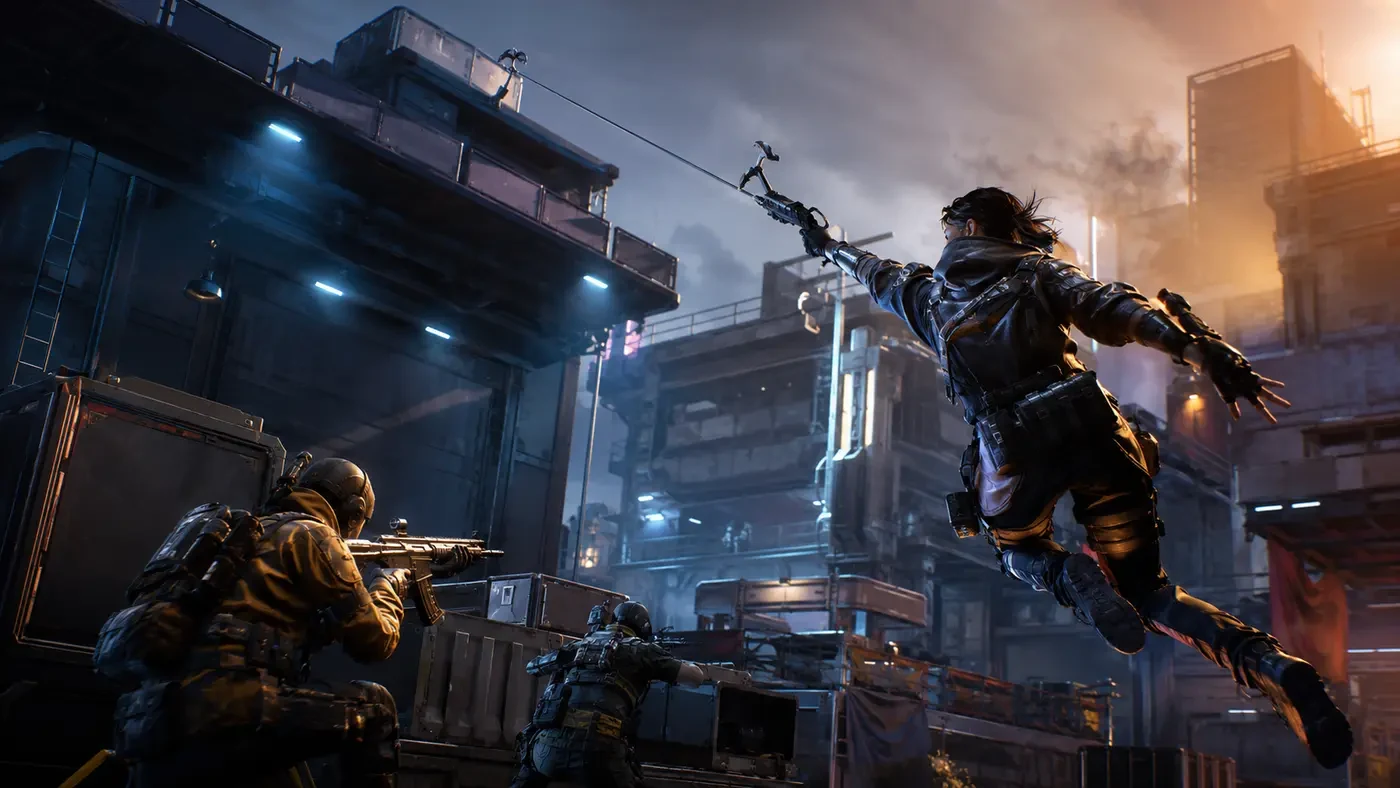
The Grappling Hook is one of Blood Strike’s most flexible tactical items because it changes where and when a fight can happen. The official March 12, 2026 update introduced it as a tool for fast movement toward a target location, seizing high ground, travelling between buildings and creating distance when a fight turns unfavourable.
That description sounds simple, but strong Grappling Hook play depends on route selection, timing and squad support. A quick movement tool can save a match when it reaches protected high ground. The same tool can expose a player if the landing point is visible, isolated or surrounded by enemies.
This guide focuses on repeatable decisions rather than unverified statistics. Blood Strike’s official notes do not provide a permanent range, exact activation time or universal number of uses, so those values are not assumed here. Check the current live build and training environment whenever an update changes tactical equipment.
What the Grappling Hook Officially Does
Blood Strike’s development team added the Grappling Hook as a tactical item in the second-anniversary update. The official announcement identifies three central uses: quickly reaching high ground, traversing between buildings and opening distance when disadvantaged in combat.
The same update says players can obtain the item from ground supplies or by calling combat equipment. Custom-room options were also expanded to allow the Grappling Hook, giving teams a controlled place to practise when the relevant room setting is enabled.
Confirmed roles
- Move rapidly toward a selected target location.
- Reach elevated positions more quickly than an ordinary climb.
- Transfer across suitable gaps between buildings.
- Create separation from opponents during a poor engagement.
- Support custom-room practice when the host enables the item.
Details that can change
- Availability in a particular mode or playlist.
- Ground-spawn locations and combat-equipment access.
- Exact reach, handling and interruption behaviour.
- How later balance patches affect movement.
Always test these details in the current version instead of relying on an older clip. The tactical purpose is stable even when balance values change: convert a reachable surface into a safer or more useful position.
Choose the Landing Point Before You Fire
The most common Grappling Hook mistake is aiming at a visible roof without planning what happens after arrival. High ground is valuable only when it provides cover, sightlines and a route back to the squad.
Use the three-second route scan
- Check the landing edge. Look for a wall, crate, ventilation unit or roof shape that can break line of sight.
- Check enemy angles. Identify windows, balconies and neighbouring roofs that can see the destination.
- Check the second route. Know whether you will fight, drop, cross or return after landing.
If the destination has no cover and several enemy angles, the hook may only move you into a more dangerous location faster. A lower balcony with a protected corner can be better than the tallest roof.
Aim beyond the obvious edge
When the live geometry permits it, favour a target that pulls you toward usable cover rather than leaving you hanging at an exposed lip. Practise how different surfaces affect arrival. Do not discover the landing behaviour for the first time during a ranked endgame.
Four High-Ground Situations
Opening a fight
A quick vertical route can create a cross-angle before the enemy settles. This works best when teammates remain visible to one another and can pressure the same area. Tell the squad before moving so they know which enemy angle you are creating.
Breaking a rooftop hold
Do not grapple directly into the centre of a roof controlled by a full team. Use the item to reach a side level, protected ledge or connected structure. The goal is to force defenders to divide attention, not to arrive alone inside their strongest position.
Escaping low ground
Low terrain becomes dangerous when opponents control windows or ridges. The hook can shorten the exposed climb. Deploy smoke or ask teammates to suppress the dangerous angle first when those options are available.
Preparing for the next zone
Mobility is strongest when used before the zone creates panic. Identify an elevated route while there is still time to inspect the landing and regroup. Saving the tool forever can be as wasteful as using it without a plan.
Use the Hook to Disengage Correctly
The official announcement specifically presents the Grappling Hook as a way to create instant distance when at a disadvantage. Distance alone is not a complete escape. The landing point must prevent an immediate chase or give time to heal, reload and change direction.
Break line of sight first
Move behind a wall, vehicle, rock or interior corner before committing when possible. If the enemy watches the entire path, rapid movement may still be tracked. A short moment of concealment makes the destination less predictable.
Escape sideways, not only backwards
Retreating directly away often keeps you inside the opponent’s firing lane. A diagonal move toward another floor or neighbouring structure can remove the angle and force the pursuer to choose a new route.
Do not abandon a recoverable teammate
Call the escape before using it. If one player moves without warning, the enemy may focus everyone left behind. Decide whether the squad is resetting together, one player is creating a distraction, or the hook user is taking a position to cover a revive.
Building-to-Building Transfers
Urban transfers can bypass streets, doors and staircases that enemies expect you to use. They are also risky because the departure and arrival points may be visible from several elevations.
| Route check | Good sign | Warning sign |
|---|---|---|
| Departure | Protected by a wall or smoke | Enemy has a clear view of the launch |
| Landing | Immediate hard cover | Open roof with no exit |
| Squad spacing | Teammates can support or follow | Hook user becomes isolated |
| Next move | Known drop, door or cross route | No plan after arrival |
| Zone | Route gains safe ground | Transfer moves deeper outside the zone |
Before crossing, mark the destination and use a short countdown. The first player should announce whether the landing is clear. If the route is compromised, the rest of the team needs time to cancel rather than following automatically.
Squad Roles for Grappling Routes
A mobility item is not only the carrier’s responsibility. A coordinated squad can make the route safer by dividing information and protection.
Route caller
The route caller selects the destination and decides whether the move continues. This prevents several players from choosing different roofs during a stressful fight.
Hook user
The first mover checks the landing, reports enemy presence and avoids pushing farther until support is ready. Reaching high ground does not require taking an immediate duel.
Cover player
The cover player watches windows, roof edges and enemy pushes during departure. Clear communication matters more than continuous firing; the player should call any opponent who gains a new angle.
Anchor
The anchor protects the original position and prevents an enemy from collapsing on the remaining team. Once the destination is secure, the anchor can rotate through the safest available route.
Short Callouts That Reduce Confusion
- “Hooking roof left” identifies the tool, destination and side.
- “Cover launch” asks teammates to watch the departure angle.
- “Landing clear” confirms the first player has usable space.
- “One top” reports an enemy on the destination level.
- “Cancel hook” stops teammates from following a failed route.
- “Reset upper floor” tells the squad to disengage and regroup above.
Avoid long explanations during movement. Discuss the full route before the fight, then use consistent phrases when timing becomes important.
Common Grappling Hook Mistakes
Hooking into an unseen roof
Information should come before movement. Use sound, teammate sightlines and recent enemy positions. If the roof is unknown, choose an edge that allows a quick drop rather than the centre.
Arriving with an empty magazine
Reload and heal before launching when the situation allows. Fast movement does not create time to prepare after landing if an opponent is already waiting.
Chasing one weak enemy
A low-health target can lead the hook user into the rest of the squad. Ask whether the elimination is worth leaving cover, zone position and team support.
Repeating the same route
After opponents see one transfer, they can pre-aim it. Change the timing, destination or approach. Sometimes the best decision is to keep the hook and use the threat of vertical movement without committing.
Confusing height with safety
The tallest point may be visible from every direction. High ground should improve cover and information, not only elevation.
A 15-Minute Practice Routine
Use Training Ground or a suitable Custom Room with the Grappling Hook option when available in the current build.
- Three minutes: surface testing. Try different roof edges, balconies and walls. Observe which targets produce clean arrivals.
- Three minutes: covered launches. Begin from behind cover and expose yourself only long enough to move.
- Three minutes: landing actions. Practise arriving, taking cover, checking an angle and choosing a second route.
- Three minutes: escape routes. Start from a deliberately weak low-ground position and identify two diagonal exits.
- Three minutes: squad countdowns. Use the same destination marks and short callouts with teammates.
Record which surfaces fail or leave the player exposed. A small personal route library is more useful than memorising an unverified maximum range.
Final Checklist
- Identify cover at the destination.
- Check windows, roofs and cross-angles.
- Reload and heal before movement when possible.
- Tell the squad where and why you are moving.
- Assign someone to cover the launch.
- Plan a second route after landing.
- Cancel if new information makes the destination unsafe.
- Re-test behaviour after major updates.
The Grappling Hook rewards preparation more than speed alone. Use it to create a defendable angle, shorten an exposed climb or break a losing engagement. When the destination, squad roles and follow-up route are clear, the item becomes a tactical advantage instead of a risky shortcut.
Top Up Your Favourite Games
If you're looking for a trusted place to top up your favourite games including Free Fire, PUBG Mobile, Mobile Legends, Blood Strike, and Call of Duty, visit HTGTopUp.com for fast digital game top-up services. Website: https://htgtopup.com.