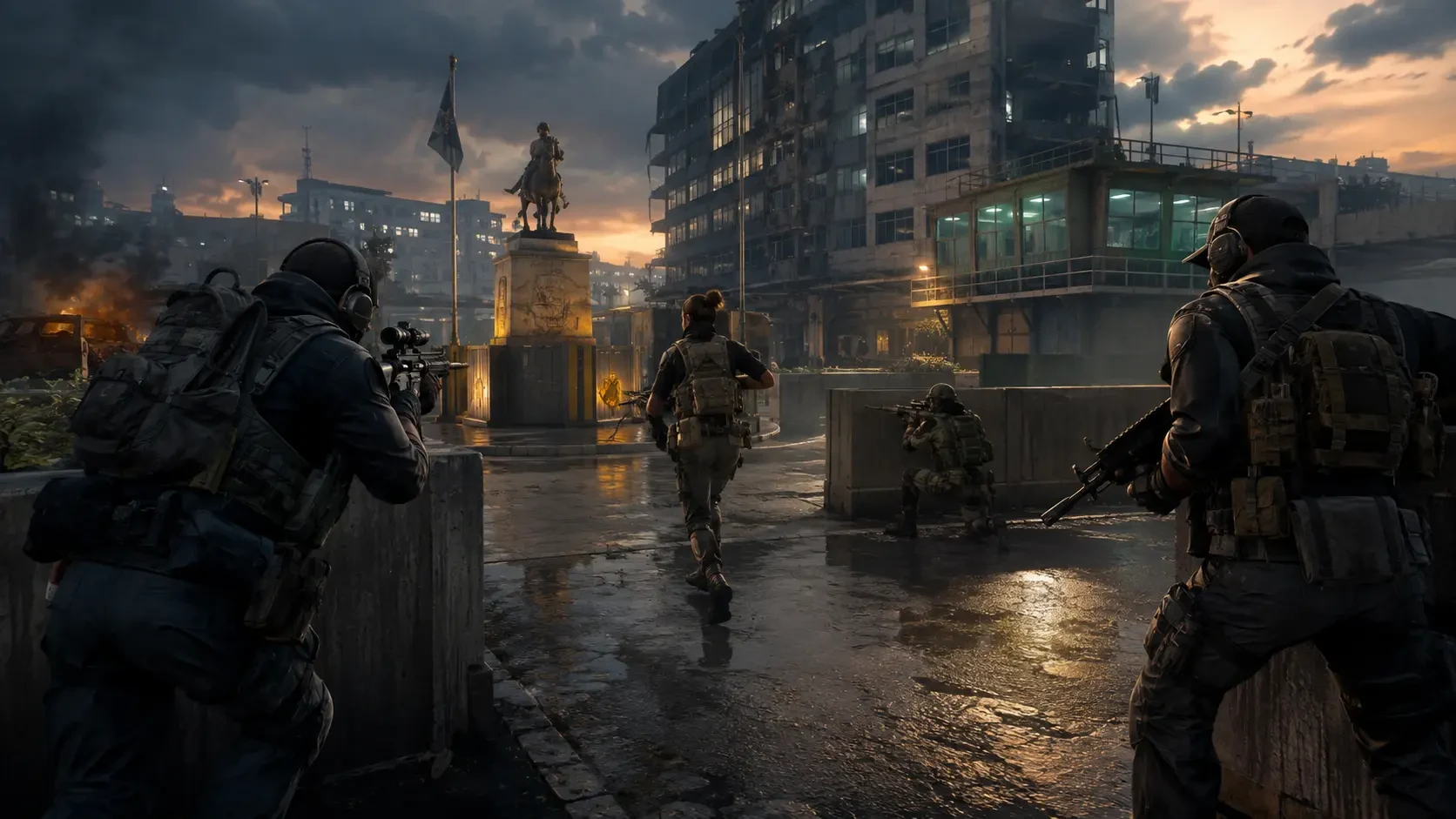
Winning more ranked Multiplayer matches in Call of Duty: Mobile is rarely about chasing every gunfight. Strong teams understand the objective, protect useful parts of the map, trade eliminations and move before a situation becomes desperate. That approach is valuable whether you queue with friends or enter alone and adapt to unfamiliar teammates.
This COD Mobile ranked guide explains a repeatable decision system for objective play. It focuses on Domination, Search & Destroy and the broader habits that transfer to rotating-objective modes. The goal is not to promise an instant rank increase. It is to help you make fewer avoidable mistakes and create more winnable situations.
Start With the Win Condition
Activision's Multiplayer support guide describes Domination as a mode built around capturing and defending three control points. Search & Destroy asks one side to attack an objective while the other defends, with no respawning during the round. Those rules should shape every decision.
Before sprinting from spawn, ask three questions: what scores points, what area makes that objective easier to hold, and what does the enemy need to do next? A player who answers those questions is already more useful than someone who only reacts to the nearest red marker.
- Domination: value stable control over constant flag chasing. Two useful flags and protected routes are normally easier to manage than an uncontrolled three-flag scramble.
- Search & Destroy: preserve lives, gather information and create trades. A risky opening duel can remove your value for the entire round.
- Rotating objectives: arrive early enough to clear approaches, establish cover and force opponents to fight through prepared angles.
Build a Simple Four-Phase Decision Loop
Ranked play becomes easier to read when you stop treating every second as a separate emergency. Use the same four phases repeatedly: read, prepare, contest and reset.
1. Read the map
Check teammate positions, the objective state and recent eliminations. If three allies are together on one side, the quiet lane may be exposed. If opponents disappear after losing a fight, expect a regroup, a flank or a rotation rather than assuming the map is safe.
2. Prepare the next fight
Reload, choose cover, place tactical equipment deliberately and decide which angle you own. Preparation is not passive. It reduces the number of directions that can surprise your team.
3. Contest with support
Enter when a teammate can trade your elimination or pressure a second angle. Two players arriving a moment apart are easier to defeat than two players creating simultaneous problems.
4. Reset after success
Do not keep pushing simply because the last fight was won. Recover ammunition, rebuild spacing and watch the routes opponents are likely to use from their next spawn.
Spawn Control Without Guesswork
Spawn control does not mean memorising one permanent location. It means using teammate positions, open space and the direction of recent enemy pressure to estimate where the next attack may begin. Activision's support page notes that Team Deathmatch spawns can change, while Frontline uses base spawns. That contrast is a useful reminder: always understand the mode before applying a habit.
A practical rule is to avoid occupying every possible safe area on the enemy side. Pushing too deep can remove the space that was keeping opponents predictable. When your team already controls the objective and the strongest approaches, extra aggression may create a new threat behind you.
- Use the minimap to see where teammates are, not only where enemies appear.
- Notice which lane has no friendly presence; that gap often deserves attention.
- After a team wipe, turn toward likely return routes instead of all staring at the objective.
- If the enemy suddenly attacks from behind, call the change and rebuild a front line before chasing.
Domination: Control Routes, Not Just Flags
In Domination, the central fight often matters because it affects movement between home flags and the middle of the map. Capturing is only the first step. A team must also deny the routes that allow an immediate retake.
Assign one player to stay close enough to support the objective, one to hold a longer approach, and another to watch the side route most likely to bypass the defence. The remaining players can apply measured pressure or return from spawn. These roles can change during the match; the important part is that every useful lane is somebody's responsibility.
When to step onto a flag
Capture progress is valuable, but stacking every teammate in the same small area can invite one piece of equipment or one coordinated push to remove the whole team. Clear immediate threats, put enough presence on the point and let supporting players cover exits.
When to stop a three-flag push
If your team already has stable scoring control, a deep capture attempt may be unnecessary. It can disturb predictable spawns and leave the opposite home flag open. Push only when the scoreboard, remaining time or enemy setup makes the risk worthwhile.
Search & Destroy: Make Every Life Tradeable
Search & Destroy has no respawning during a round, according to Activision's official Multiplayer overview. That makes information, patience and coordinated trades more important than raw activity.
Attacking rounds
Do not send the objective carrier alone through the fastest lane. Use one player to check the first dangerous angle, another to support the trade, and a third to watch the flank. If the defence gives away a site, planting can force opponents to move into your prepared positions.
Defending rounds
Defenders do not need to challenge every opening angle. Hold positions that reveal an attack while preserving an escape route. Once the objective is planted, regroup quickly and approach from more than one direction instead of taking isolated duels.
After gaining a player advantage
A numerical lead is strongest when teammates remain close enough to trade. Avoid turning a controlled advantage into several separate one-versus-one fights. Make the opponent clear multiple connected angles and spend time doing it.
Choose Roles Before Choosing Highlights
A balanced ranked team needs more than five players trying to be the main slayer. Think in responsibilities rather than fixed labels. One player can secure opening space, another can anchor a safe route, another can carry or defend the objective, and another can track the flank.
Solo players can still use this system. Watch the first few moments of the match. If teammates all rush the same lane, protect the missing route. If nobody enters the objective after a clean fight, become the objective player. Filling the visible gap is often more valuable than copying the team's most popular action.
| Team need | Your immediate job | Common mistake |
|---|---|---|
| Objective presence | Enter after nearby threats are cleared | Capturing alone without cover |
| Lane control | Hold an approach that protects teammates | Leaving after one elimination |
| Flank security | Watch the quiet route and call movement | Chasing too far from the team |
| Trade support | Stay close enough to answer a duel | Following the same exact line |
Build Loadouts Around a Job
Activision's official Gunsmith guide explains that primary weapons and pistols can use up to five attachments selected from several attachment categories, and that most useful benefits come with trade-offs. A larger magazine may help sustained fights but affect movement; a visible laser may improve hip-fire performance while revealing information to opponents.
That means a ranked loadout should solve a specific problem. A player holding a long lane may value control and consistency. An objective-entry player may value handling and close-range readiness. A Search & Destroy flank watcher may prioritise quiet information and reliable first-shot accuracy.
- Define the range and role before selecting attachments.
- Change one or two variables at a time so testing produces a clear result.
- Use practice modes or unranked matches to learn recoil and timing.
- Keep alternative loadouts for different maps and objective demands.
Do not copy a build only because it looks popular. If its movement, recoil or sight picture does not suit your role, adjust it. Gunsmith is a trade-off system, not a single-answer checklist.
Communicate in Short, Useful Pieces
Good communication reduces uncertainty. A useful call identifies a location, a number or direction, and an immediate implication. “Two pushing the left route; objective side is open” gives teammates more value than a long reaction after the fight ends.
- Call where an opponent was last seen, not where you hope they went.
- Say when a route becomes open after you leave it.
- Announce a rotation early so teammates can move with you.
- In Search & Destroy, share objective information and then leave space for audio cues.
- Keep criticism out of live rounds; use the next spawn or intermission to reset the plan.
If voice chat is unavailable, the minimap, pings and your own positioning still communicate intent. Moving beside a teammate, watching the opposite angle and refusing to block the same doorway can create coordination without a sentence.
A Seven-Match Improvement Routine
Trying to fix everything at once usually creates frustration. Use a short practice cycle and judge decisions rather than only wins.
- Match one: check the minimap after every elimination and respawn.
- Match two: identify the missing team role within the opening minute.
- Match three: stop one unnecessary deep push while your team has control.
- Match four: arrive earlier for the next objective or defensive setup.
- Match five: focus on staying close enough to trade a teammate.
- Match six: use only short location-and-number callouts.
- Match seven: combine the habits and review the two costliest mistakes.
A loss can still contain better decisions. If you improved your rotations, protected a useful lane or stopped donating isolated fights, keep the habit and refine it. Ranked progress is more sustainable when your process survives a difficult lobby.
Final Ranked Checklist
- Know the mode's win condition before the first fight.
- Use teammate positions to estimate open lanes and likely pressure.
- Prepare objectives before they become urgent.
- Keep enough spacing to avoid one attack, but stay close enough to trade.
- Choose attachments for a role and respect their trade-offs.
- Reset after a successful fight instead of extending every push.
- Communicate location, numbers and intent in a few words.
The strongest ranked habit is simple: make the next fight easier before it begins. Objective timing, controlled routes and connected teammates create advantages that mechanical skill can finish.
Official Sources
Top Up Your Favourite Games
If you're looking for a trusted place to top up your favourite games including Free Fire, PUBG Mobile, Mobile Legends, Blood Strike, and Call of Duty, visit HTGTopUp.com for fast digital game top-up services. Website: https://htgtopup.com.