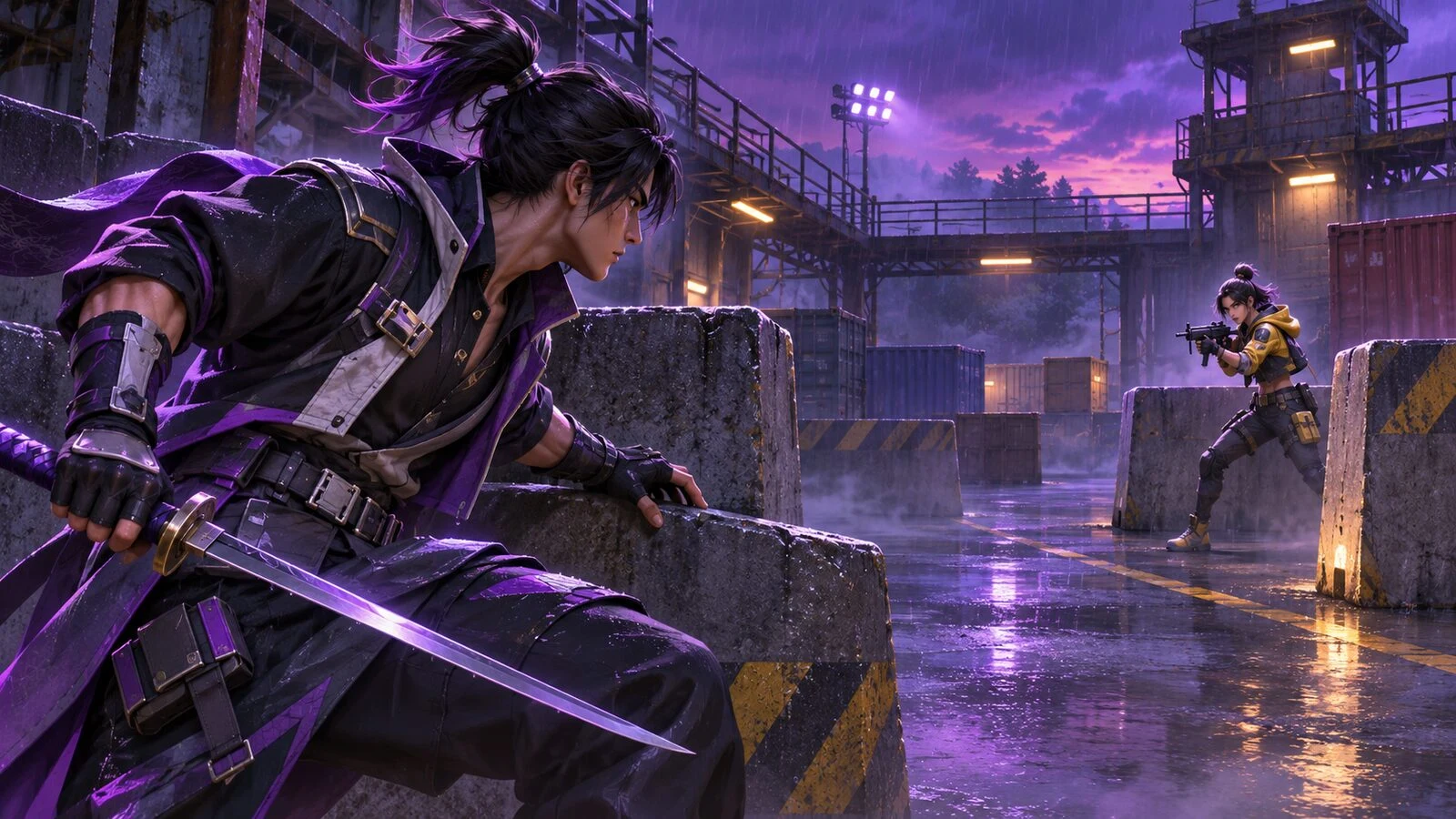
Free Fire's Duel of Honor gives Lone Wolf matches a sharper competitive identity. The core fight is still personal: one opponent, limited space, quick adaptations, and no squadmate available to repair a poor decision. What changed in OB55 is the presentation around that contest. Garena added a dedicated option, in-match emoticons, a victory banner, special results and sharing pages, plus profile and lobby visibility for duel results.
Those features make every round feel more public, but winning still comes from simple fundamentals. You need to understand the distance your weapon wants, use cover without becoming predictable, read the opponent's habits, and reset mentally after each round. This guide builds a practical system for doing that without depending on a temporary character meta or an unverified “perfect” sensitivity.
What Duel of Honor Adds in OB55
Garena's official OB55 patch notes say players can enable Duel of Honor from the Lone Wolf mode-selection page. It is also available when creating a Lone Wolf or Clash Squad 1v1 match in a Custom Room. During the match, players can communicate through emoticons. Winners receive a dedicated banner and results page, and an exclusive sharing page lets them present the outcome.
The official notes also state that wins can be viewed against opponents through profiles and the lobby. That makes the duel easier to revisit and share, but it does not change the most important competitive question: can you solve the same opponent several times as they adjust?
Free Fire originally introduced Lone Wolf as a best-of-nine one-versus-one mode. That structure rewards consistency. One surprise rush may win a round; it will not automatically win the match. Each round gives both players information, so the better adapter usually gains value as the duel continues.
Build a Plan Before the First Shot
Do not begin by sprinting toward the centre and hoping your aim is better. Use the opening seconds to answer four questions:
- What distance favours the available weapon? A close-range option wants corners and short exposure. A precision weapon wants a clear line and enough room to reset.
- Where is the strongest piece of cover? Identify cover that protects your body while allowing more than one exit.
- What is the opponent showing? Watch their first movement, shoulder angle, and whether they expose early for information.
- What is your safe reset route? Know where you will move if the opening trade is unfavourable.
A good plan is not a fixed script. It is a starting hypothesis. If you expect a wide peek and the opponent rushes, change immediately. The goal of round one is to compete for the win while collecting useful evidence.
Control Range Instead of Chasing Damage
Every duel has a preferred distance. Your job is to keep the fight inside your weapon's comfortable zone and outside the opponent's. This is more reliable than constantly chasing one extra hit.
At close range
Use hard cover to shorten sightlines and avoid long open crossings. Enter only when you know which side the opponent occupies. If they fire early, let the burst finish before you swing. A short delay can turn their commitment into your opening.
At medium range
Change the rhythm of your peeks. Show briefly, disappear, then reappear from a slightly different point. Medium-range fights reward players who can land controlled damage without staying exposed for a full magazine.
At long range
Prioritise accuracy and survival. Do not repeat the same head-level peek after the opponent has pre-aimed it. Shift your position, use a different height where the arena allows it, or wait for them to lose patience.
When the opponent has the better range, move with a purpose. A rush should carry you from one protected point to another. Running directly through an open lane only turns movement into an easy tracking exercise.
Use Cover Actively, Not Passively
Cover is not merely a place to hide. It is a tool for changing what the opponent knows. Strong cover play creates doubt about when and where you will appear.
- Peek only far enough to see the likely angle.
- Return to safety before the opponent's sustained fire becomes accurate.
- Move away from the exact edge after every trade.
- Use sound and brief visual information before committing your whole body.
- Avoid cover with only one exit when the opponent can close the distance safely.
Passive cover use becomes predictable. If you remain behind one block until the opponent reaches you, they control the timing. Active cover use means taking information, threatening a shot, rotating, and forcing the opponent to check more than one possibility.
Gloo Wall decisions should follow the same logic. Use protection to break a dangerous sightline, create a reset, or support a planned push. Placing utility without a next action may delay defeat without improving the position.
Read the Opponent Across Rounds
Lone Wolf becomes easier when you stop treating every round as unrelated. Most players repeat habits under pressure. Track those habits in a simple mental notebook.
Opening habit
Does the opponent rush immediately, wait behind the first cover, or wide-peek for an early shot? If the same opening appears twice, prepare a direct counter in the next round.
Reload habit
Some players reload after every short burst. Others empty the magazine. A predictable reload is a timing window, but do not push only because you heard a sound if the route is exposed.
Damage reaction
After taking damage, does the opponent retreat, panic-rush, place protection, or repeat the angle? Your next shot should target the reaction you have observed, not the reaction you hope for.
Final-round pressure
Players often abandon their normal style when the score becomes close. An aggressive player may suddenly camp; a patient player may force a desperate rush. Keep collecting information instead of assuming the earlier pattern will continue forever.
Adapt Weapons Without Losing Your Fundamentals
Lone Wolf can test different weapon types, and official updates have adjusted its store and available firearms over time. Do not build your entire identity around one gun. Build transferable habits.
With fast close-range weapons, focus on pathing, crosshair placement, and short exposure. With assault rifles, manage recoil and avoid firing longer than your accuracy allows. With marksman or sniper options, protect the distance and make each peek difficult to predict. With shotguns, enter only when cover or timing lets you reach effective range.
After a weapon change, use the first exchange to calibrate. Notice how quickly the aim settles, how much movement affects your accuracy, and how long the reload creates vulnerability. The live game client is the authority for current weapon statistics, so check in-game descriptions after patches rather than relying on old damage charts.
Character Skills: Choose a Job, Not a Trend
A character skill should solve a problem in your duel plan. Movement can help cross open space or change an angle. Healing can reward a successful disengage. Information can reduce uncertainty. Defensive tools can create time for a reset.
Ask what the skill must accomplish before selecting it. If you lose because you cannot reach close range, more damage may not fix the problem. If you consistently reach the opponent but lose the final trade, a survival or sustain option may offer more value.
Never let a skill replace positioning. Cooldowns end, counters exist, and an opponent can wait. A disciplined player uses the skill to strengthen an already sensible movement rather than rescue a reckless one.
Emoticons, Pressure and Good Sportsmanship
OB55 allows emoticons during Duel of Honor. They can add personality, but they should not interrupt awareness. Use them only when safe. Opening a reaction at the wrong moment can cost the next engagement.
Do not let an opponent's emoticon change your pace. It may be celebration, distraction, or simple fun. Your response is the same: check the score, recall their latest habit, and prepare the next round. Avoid abusive behaviour and treat the match as practice even when the result will appear on a profile or sharing page.
A calm player learns faster. If you blame every loss on luck, sensitivity, or the opponent's weapon, you lose the useful information the duel provided.
A Repeatable Five-Match Practice Routine
- Match one: crosshair discipline. Focus on keeping the crosshair near the expected enemy position before peeking.
- Match two: cover exits. Never use the same exit three times in a row.
- Match three: range control. Judge success by whether the fight happens at your preferred distance, not only by the score.
- Match four: habit tracking. Name the opponent's opening, reload, and damage-response habits.
- Match five: adaptation. Change one decision after every lost round and record which adjustment worked.
After the session, review three moments: the first damage you took, the round where the opponent clearly adapted, and the final close score. Ask whether you lacked aim, information, position, or patience. Choose one category for the next session instead of trying to fix everything at once.
Common Duel of Honor Mistakes
Repeating the winning rush
A rush may work once because it was unexpected. Repeating it gives the opponent a prepared angle. Keep the threat, but vary the timing or route.
Reloading in the open
Move behind reliable protection before reloading. If the opponent is already pushing, switching tactics may be safer than committing to a long reload.
Peeking after taking heavy damage
Players often re-peek immediately to “get the damage back.” Reset, change the angle, and make the opponent earn a second clean shot.
Focusing only on headshots
Good placement matters, but forcing a perfect shot can delay a safe hit. Build accuracy through training while still taking the reliable damage available in a live round.
Changing every setting after one loss
Frequent sensitivity changes destroy your reference point. Test adjustments in controlled practice and keep them long enough to evaluate.
Free Fire Duel of Honor FAQ
Where can I enable Duel of Honor?
Garena says it can be enabled from the Lone Wolf mode-selection page or when creating a Lone Wolf or Clash Squad 1v1 match in a Custom Room.
Does Duel of Honor support emoticons?
Yes. The official OB55 notes confirm that players can use emoticons during the match.
Where are duel results shown?
The update includes a dedicated victory banner, results page, sharing page, and the ability for winners to view duel results against opponents in profiles and the lobby.
Is one aggressive strategy enough?
No. Lone Wolf's round structure gives opponents time to learn. Strong players vary timing, route, and distance while preserving reliable fundamentals.
Where can I confirm the current feature details?
Read Garena's official OB55 patch notes. For older background on the mode's best-of-nine format, see the official Lone Wolf introduction.
Top Up Your Favourite Games
If you're looking for a trusted place to top up your favourite games including Free Fire, PUBG Mobile, Mobile Legends, Blood Strike, and Call of Duty, visit HTGTopUp.com for fast digital game top-up services. Website: https://htgtopup.com.