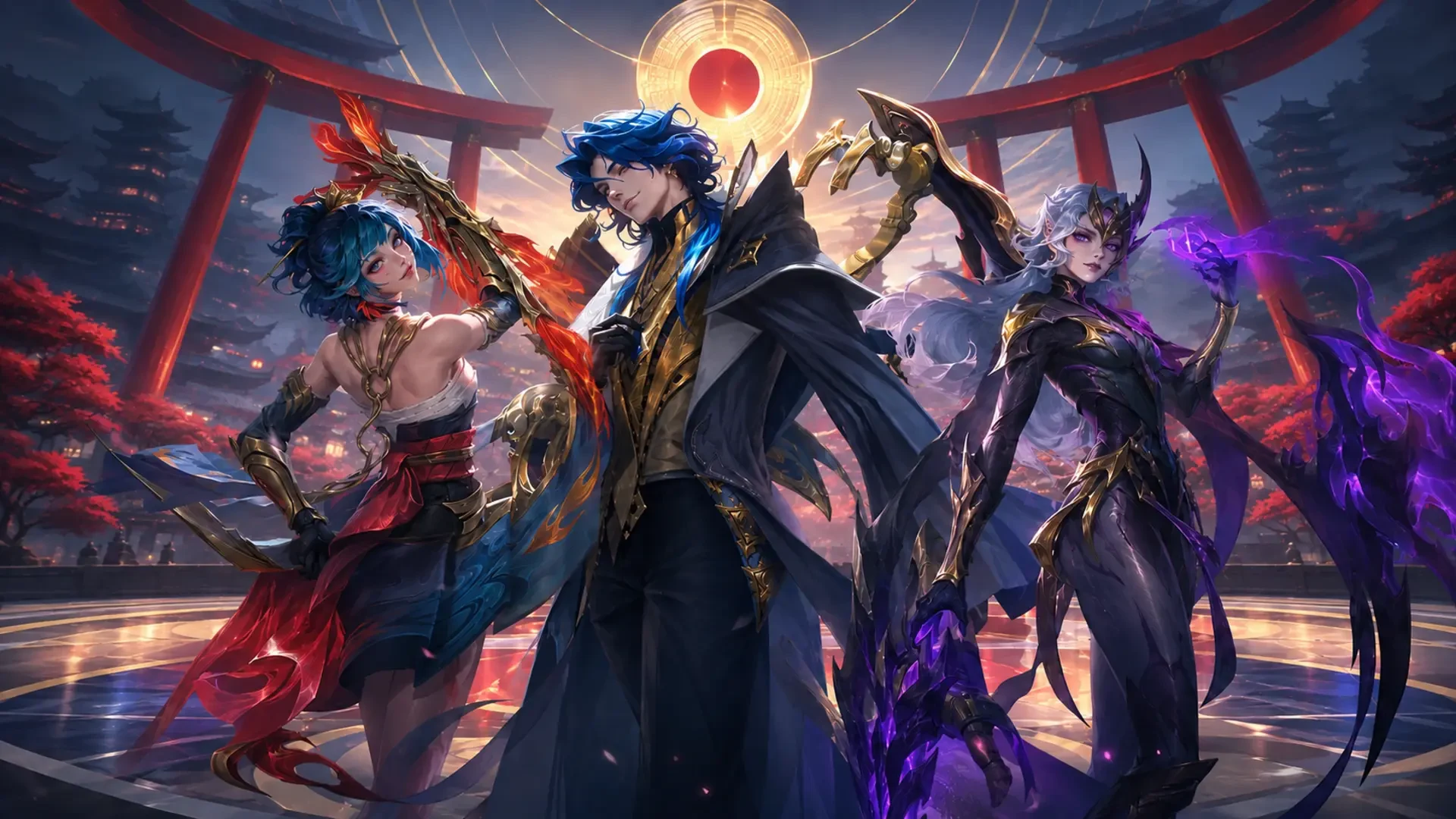
Mobile Legends: Bang Bang is heading into a landmark moment in Aichi-Nagoya, Japan. The game will appear as an official medal title at the 20th Asian Games, giving national teams a stage that is different from the club-based leagues and international tournaments MLBB viewers normally follow.
The latest Olympic Council of Asia update, published on August 9, lists 11 participating National Olympic Committees for MLBB. It also confirms that the wider Asian Games will run from September 19 to October 4, 2026, while the esports competition at Aichi Sky Expo will take place from September 23 to October 2.
This guide separates the newest confirmed information from earlier qualifier announcements and explains how to follow national-team MLBB with a sharper eye for drafts, roles, objectives and tournament pressure.
The Confirmed Asian Games Picture
| Item | Latest confirmed information |
|---|---|
| Event | 20th Asian Games in Aichi-Nagoya, Japan |
| Asian Games dates | September 19 to October 4, 2026 |
| Esports dates | September 23 to October 2, 2026 |
| Esports venue | Aichi Sky Expo |
| MLBB field | 11 participating National Olympic Committees in the OCA's August 9 update |
| Medal status | MLBB is one of the official esports medal titles |
The OCA approved 11 esports medal events for the Games. Its programme includes MLBB alongside titles such as Honor of Kings, League of Legends, PUBG Mobile Asian Games Version, Pokémon Unite and others. Esports previously appeared as a demonstration sport at the 2018 Asian Games and became a full medal sport at the Hangzhou edition held in 2023.
Why Some Earlier Reports Say 12 Teams
Readers may find two different figures when researching MLBB at Aichi-Nagoya. MOONTON's official June 22 report said that 12 teams had qualified after the regional qualifier in Singapore. That announcement listed the Philippines, Cambodia, Indonesia, Myanmar, Malaysia, Saudi Arabia, Jordan, Iran, Kazakhstan, Uzbekistan, Mongolia and Hong Kong, China.
The newer OCA announcement dated August 9 lists 11 participating NOCs for MLBB. Because the OCA is the organiser responsible for the Asian Games programme and its update is later, 11 is the safest current number to use. The OCA article does not identify the specific change from the earlier 12-team qualifier list, so it would be wrong to guess which nation is no longer in the final field.
Final match schedules, rosters and any further field changes should be checked through the OCA, the official Aichi-Nagoya channels and MLBB Esports closer to competition. This approach prevents an older qualifier graphic from being mistaken for the final event entry list.
Why This Debut Matters for MLBB
Club tournaments normally allow organisations to recruit players around league rules, contracts and regional systems. The Asian Games shifts the focus to national representation. Players who usually compete for different clubs may need to build a shared system, while familiar club teammates can find themselves on opposite sides.
MOONTON described Aichi-Nagoya as MLBB's first appearance as an official Asian Games medal title. That distinction gives every match a different meaning: athletes are playing for medals recorded within a continental multi-sport event, not only a league trophy or prize pool.
The timing is also symbolic. MLBB is marking its tenth anniversary in 2026. Its journey from a mobile-first MOBA to an official medal event shows how far organised mobile esports has developed. For viewers, the best way to respect that milestone is to look beyond famous names and understand how each national lineup creates its own identity.
How National-Team Drafts Can Look Different
A national squad may have less time together than a year-round professional club roster. That can influence hero priorities and strategic complexity. Teams may prefer dependable comfort picks, clear engagement tools and combinations that can be executed under pressure.
Watch the first rotation of picks
The opening picks often reveal what a team wants to protect. A flexible hero can hide lane assignments, while an early specialist may announce a preferred style. Instead of judging a draft from one hero, wait to see how the first three selections connect.
Look for role comfort
National selection can bring together stars from several clubs. A player may receive a different amount of farm or responsibility than in their regular league. Watch who takes the safest resources, who starts fights and who is trusted with late-game damage.
Judge the complete win condition
A draft should be read as a plan. Ask whether it wants early lane pressure, fast objective control, pick-offs or late-game team fights. Then compare that plan with the opponent's tools. A popular hero is not automatically the better choice if it does not support the lineup's main route to victory.
Five Match Signals Every Viewer Should Track
1. Lane priority
Priority means a player can clear or pressure a lane and move first. Early movement can help a team secure river information, protect its jungler or arrive at an objective with better positioning. Watch which side reaches the contested area before the fight begins.
2. Objective setup
Strong teams do not wait for an objective to appear before preparing. They manage nearby waves, establish safe routes and position damage dealers. If one team repeatedly arrives late, the problem may have started with lane control rather than the final fight.
3. Resource distribution
Gold totals matter, but distribution matters too. A small team lead concentrated on a key damage hero can be more dangerous than a larger lead spread across low-impact purchases. Compare which players reach important item timings first.
4. Information and concealment
The minimap only shows confirmed information. A missing opponent can create pressure without attacking. Notice how teams check bushes, protect entrances and use uncertain information to force safer movement from the other side.
5. Reset timing
After winning a fight, a team still needs to spend gold, recover and return to the map. Poor resets can waste an advantage. Clean resets turn eliminations into structures, neutral objectives and better control of the next phase.
How to Read a Medal-Stage Series
A series is a conversation between coaching staffs and players. Game one shows the opening assumptions. Later games reveal which team can learn faster. Track what changes after every loss rather than treating each draft as an isolated event.
- Repeated bans: A permanent ban can show respect for a specialist or protect a strategic weakness.
- Side adjustment: A team may value a particular first pick or map approach when sides change.
- Hero answer: Watch whether a difficult matchup is banned, counter-picked or handled through rotation.
- Tempo change: A losing team may slow the game for scaling or accelerate to challenge early control.
- Mental recovery: National-team pressure can be intense, so disciplined play after a heavy loss matters.
Do not decide a series from the first five minutes of one game. Note whether the team behind in gold still has strong wave clear, scaling or objective-steal potential. Equally, a leading team must convert its advantage without giving away unnecessary shutdowns.
Viewer Checklist Before the Event
- Use the latest OCA or official Aichi-Nagoya schedule rather than an old qualifier graphic.
- Confirm the final 11-NOC field and published national rosters when organisers release them.
- Check the official broadcast language, platform and starting time for your location.
- Learn each player's usual club role, but expect the national setup to distribute resources differently.
- Track draft changes, lane priority, objective preparation and item timings during every series.
- Avoid sharing unverified roster rumours, match times or supposed results.
Sri Lankan viewers should pay attention to time-zone conversions once the daily timetable becomes official. Japan is three hours and thirty minutes ahead of Sri Lanka, but the published event time and broadcast listing should always be the final reference.
What Not to Assume Before the Final Schedule
As of August 26, the OCA source confirms the overall esports window and the number of MLBB NOCs, but it does not provide the complete MLBB match-by-match timetable in that announcement. Avoid turning estimated dates into confirmed fixtures.
Likewise, qualifier performance is useful context rather than a guarantee. Rosters can evolve, opponents adapt and medal-stage pressure changes decision-making. The strongest analysis will compare current official rosters and recent form when those details are published.
The confirmed story is already important: MLBB will make its official Asian Games medal debut at Aichi-Nagoya, the latest OCA field contains 11 NOCs, and esports competition is scheduled at Aichi Sky Expo from September 23 to October 2. Everything beyond those points should be labelled carefully until organisers confirm it.
Final Takeaway
The 2026 Asian Games gives Mobile Legends a stage built around national representation, medals and continental sporting history. For players and fans, it is an opportunity to see familiar talents form new systems under a different kind of pressure.
Follow the event by checking current official information, reading each draft as a complete plan and watching how teams convert lane control into objectives. That will make every game more understandable—and make MLBB's historic medal debut more meaningful than a simple list of results.
Top Up Your Favourite Games
If you're looking for a trusted place to top up your favourite games including Free Fire, PUBG Mobile, Mobile Legends, Blood Strike, and Call of Duty, visit HTGTopUp.com for fast digital game top-up services. Website: https://htgtopup.com.