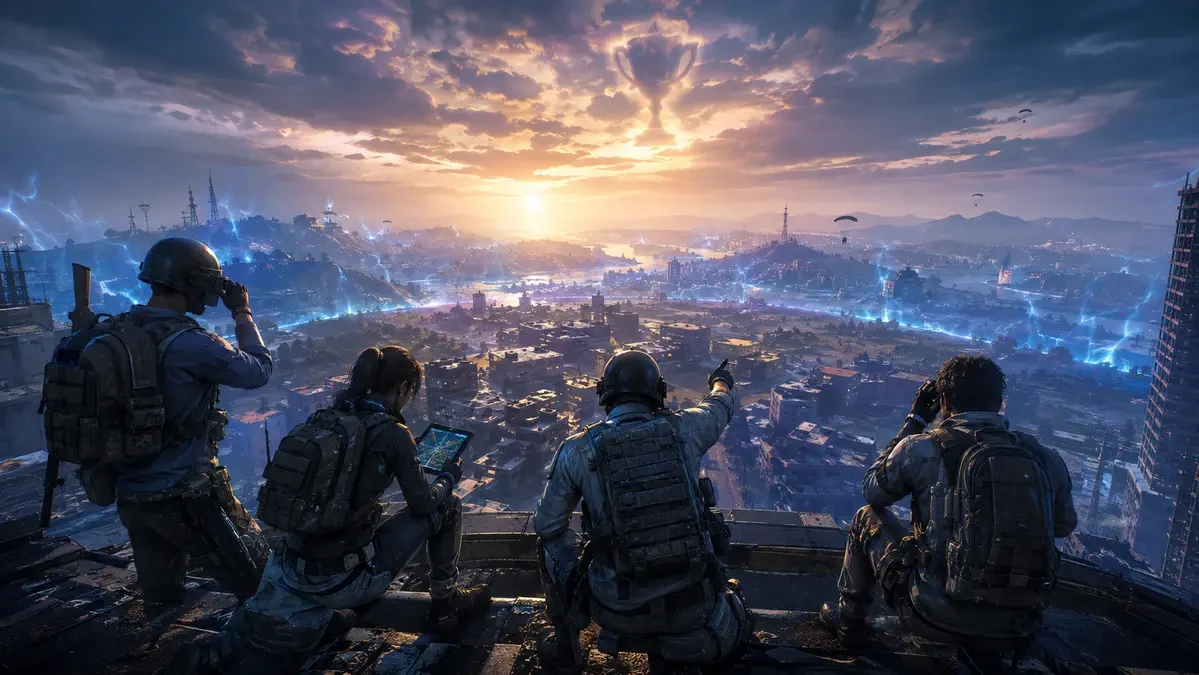
The PUBG Mobile World Cup 2026 has reached its decisive Match Point finale. The official Esports World Cup competition page lists the Grand Finals across 14–16 August, with the last round identified as the Match Point Finals. That changes how viewers should read the leaderboard: being first on points is important, but championship eligibility and the ability to win a later match become the defining story.
This guide explains the final-day structure without guessing live standings or unconfirmed thresholds. Use it to follow rotations, team priorities, pressure decisions and the broadcast’s official Match Point indicators as the title race develops.
What Is Confirmed About the PMWC 2026 Finale?
The official Esports World Cup schedule shows the PUBG Mobile World Cup Grand Finals running from 14 to 16 August 2026. Its live competition page labels the closing phase as Match Point Finals, so the last day is not simply a fixed-race points sprint.
The road to this stage began with 32 teams in the Group Stage from 6 to 9 August. The field was divided into two groups of 16, and every team played 12 matches. The top five teams from each group advanced directly to the Grand Finals. Teams placed sixth through 13th moved to the Survival Stage, while the bottom three from each group were eliminated.
Those official advancement rules matter because finalists arrived through different paths. Direct qualifiers earned time to prepare, while Survival Stage teams faced additional pressure before reaching the title lobby. Neither path guarantees the trophy once Match Point conditions begin.
How a Match Point Final Changes the Championship
In a conventional points-only final, the team with the highest total after the scheduled last match wins. A Match Point final adds another layer. Teams must first satisfy the event’s official eligibility condition. After becoming eligible, they need the required match-winning result to close the championship.
The live broadcast and official competition page are the authorities for the active threshold, eligible teams and any tournament-specific condition. Viewers should not rely on copied graphics or an older tournament’s number, because formats can be adjusted between editions.
A useful way to read the finale is to separate teams into three states:
- Building: teams still gathering the points needed to become eligible.
- Eligible: teams that have met the official Match Point condition and can potentially end the tournament with the required win.
- Closing: an eligible team that reaches the final circles with enough players, utility and position to convert the opportunity.
This structure creates suspense beyond the top line of the table. A points leader may be eligible but unable to secure the decisive win, while another eligible squad can end the competition with one outstanding match.
Why One Team Winning Can Extend the Event
Once at least one team becomes eligible, every following match can carry title-ending pressure. However, a win by a team that has not yet met the official eligibility condition may keep the competition alive. That team earns valuable points and may move closer to eligibility, but viewers should wait for the broadcast to confirm whether the championship has actually ended.
This is why the victory screen alone may not tell the complete story. Check three things after each match:
- Was the winning team already shown as Match Point eligible before the match began?
- Did the official broadcast confirm that the title condition was satisfied?
- Has the tournament declared a champion rather than only a match winner?
Keeping those questions separate prevents confusion during a fast-moving final day.
What Eligible Teams Must Balance
Survival versus control
An eligible squad needs the match-winning result, so surviving deep into the game is essential. Yet playing too passively can surrender compounds, ridgelines and rotation lanes. The strongest approach usually combines a safe early route with enough map control to avoid a desperate late crossing.
Information versus exposure
Scouting gives a team information about occupied buildings, vehicles and open paths. Every scout movement also risks losing a player. Eligible teams often need careful information gathering because opponents understand that denying their win extends the tournament.
Center position versus edge flexibility
A central compound can reduce immediate movement, but a hard zone shift may trap the team among several opponents. Edge teams have more room to choose fights, yet they must cover longer distances. Viewers should judge whether a squad has vehicles, smoke and terrain support before calling either position safe.
Eliminations versus a complete squad
Elimination points still matter, particularly for teams trying to reach eligibility. An eligible team, however, may value keeping all four players alive for the closing circles. A risky early fight can create loot and space, but it can also destroy the chance to convert the match.
How Other Finalists Can Disrupt a Match Point Team
Teams that are not yet eligible still have their own route to the championship. Their first priority is improving their points position and reaching the official threshold. At the same time, they benefit from preventing an eligible rival from winning.
That does not mean every squad will blindly chase the leaderboard leader. A reckless hunt can damage both teams and create an easy match for somebody else. More controlled disruption includes taking a key compound first, denying a bridge or road, holding vehicles, forcing an awkward rotation, or applying pressure when the eligible squad has limited cover.
The most interesting tactical moments often happen when several eligible teams enter the same late zone. Every fight then has two meanings: immediate survival and direct control over whether the tournament continues.
Five Signals to Watch on the Broadcast
1. The official eligibility marker
Use the broadcast graphic to identify which teams can close the tournament. Do not assume that a high position automatically means eligibility.
2. Four-player survival
A full squad has more angles, revival options and utility for the final circles. Losing one player early can force a major change in tempo.
3. Vehicle health and parking
Vehicles are rotation tools and temporary cover. Watch whether teams protect them from long-range damage and park them where they can support the next move.
4. Smoke and grenade economy
Utility can turn exposed ground into a playable route or break a defended position. A team that spends too much early may reach the final zone without the tools needed to win.
5. The next safe-zone shift
A favorable shift can reduce risk, but strong teams still need a plan for an unfavorable one. Look for early vehicle preparation, scouting and fallback positions before the circle moves.
How to Read the Final Two Circles
Late-game PUBG Mobile becomes a contest of information, timing and small pieces of cover. Start by counting how many players each leading team has alive. Then identify which squads must move first and which can hold their position.
An eligible team inside the next circle has a major positional advantage, but it can be attacked from multiple directions if its location is obvious. An eligible team outside the circle may need to choose between an early rotation and a delayed move behind fighting opponents.
Watch the kill feed together with the overhead map. If two teams trade players on one edge, a third squad may gain a clean path. If a vehicle explodes or a smoke line disappears, an apparently safe route can close instantly.
The final fight is rarely decided by aim alone. Player count, healing resources, throwable utility, elevation and the timing of the blue zone all influence the result.
A Simple Viewer Checklist
- Open the official PMWC competition page before the broadcast begins.
- Confirm the teams marked as Match Point eligible.
- Track which squads need points and which need the decisive win.
- Watch vehicles, utility and player count rather than only eliminations.
- Check who controls the next safe zone and who must cross open ground.
- Wait for official champion confirmation after every match.
This checklist makes the final easier to understand even if you missed earlier rounds. It also explains why a team can dominate the points table without immediately ending the tournament.
What the Group Stage Tells Us
The Group Stage format rewarded consistency across 12 matches. Direct qualification required a top-five finish within the group, while teams in positions six through 13 had to survive another stage. That structure tested more than occasional match wins: teams needed reliable placements, controlled fighting and the ability to recover from difficult games.
The Match Point finale asks a different question. Can a team turn accumulated strength into one championship-closing performance under maximum pressure? A roster that qualified comfortably may still struggle when every opponent knows it is eligible. A Survival Stage team may arrive with momentum and experience in must-perform situations.
Official Sources and Live Information
Use the official PMWC 2026 competition page for live schedule, results, participating clubs and VODs. The official EWC Week 5 overview confirms the Group Stage dates, the 32-team split, 12 matches per team and the advancement paths.
For general competitive rules, consult the PUBG Mobile Official Competition Rulebook. Live tournament graphics and rulings take priority for the exact 2026 Match Point condition.
Top Up Your Favourite Games
If you're looking for a trusted place to top up your favourite games including Free Fire, PUBG Mobile, Mobile Legends, Blood Strike, and Call of Duty, visit HTGTopUp.com for fast digital game top-up services. Website: https://htgtopup.com.