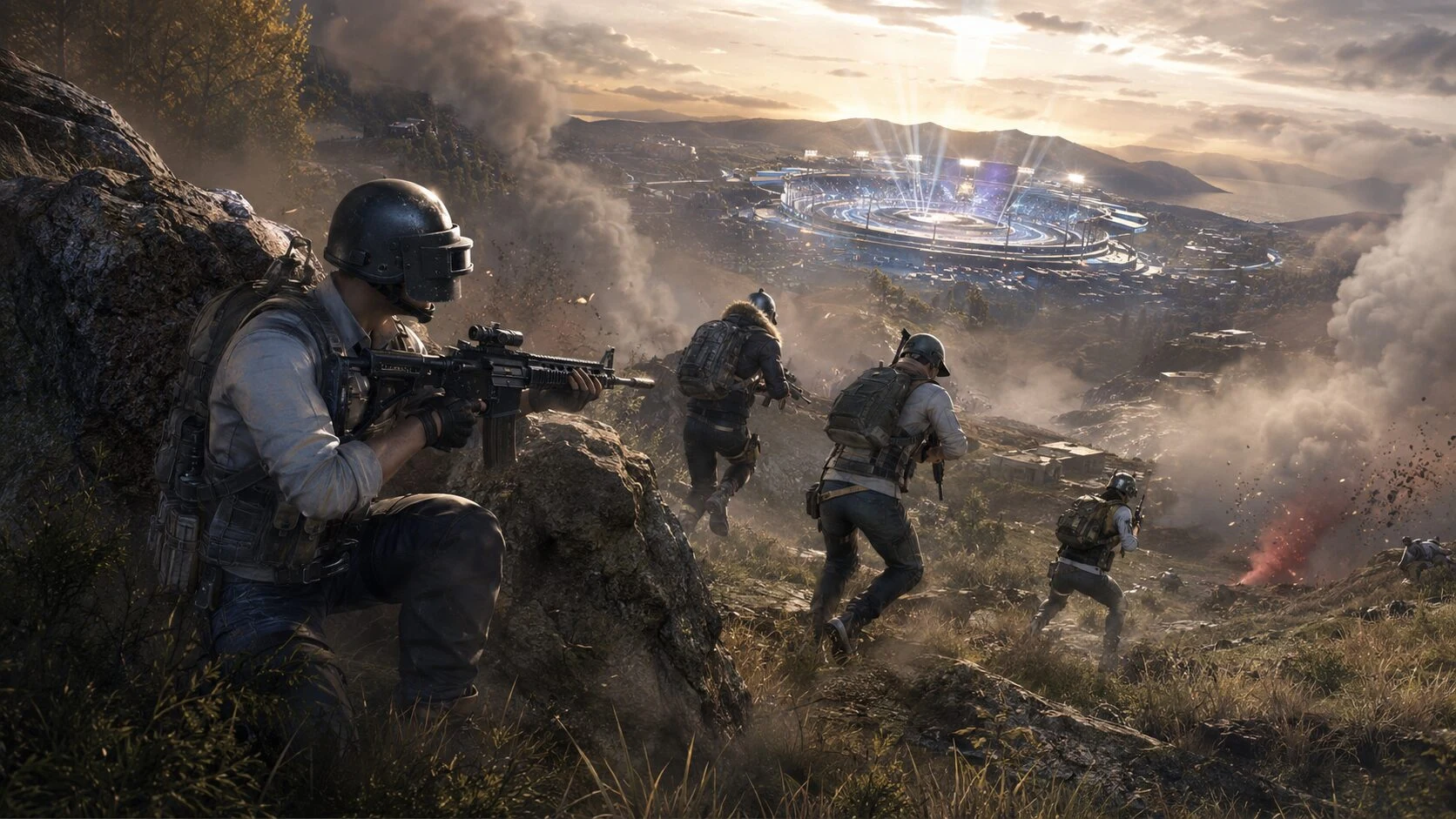
S2G Esports won the PUBG Mobile World Cup at the Esports World Cup 2026 after an unusually tense 18-match Grand Final. The Turkish organisation reached Smash Rule match point late in the competition, came close to closing the title twice, and then had to watch the last match after an early elimination. Its accumulated score of 154 points was still enough to finish first.
For PUBG Mobile players and esports fans, this final offers a useful lesson: battle royale championships are rarely decided by one spectacular push. S2G survived a slow start, steadily built points, adapted to pressure and created a lead strong enough to withstand a zero-point final game. This guide explains the verified result, how the closing matches unfolded and what ordinary squads can learn from the champion's consistency.
PMWC 2026 Result at a Glance
The official Esports World Cup report confirms that S2G Esports became the PMWC 2026 champion. The Grand Final placed 16 clubs through an 18-match test. S2G had qualified directly through the Group Stage and entered the last day already established among the leading teams.
The team did not secure the trophy by winning a Smash Rule game after reaching match point. Instead, S2G's total accumulated score remained unbeaten when the final lobby ended. The official report states that the team earned $555,000 and 130 PUBG Mobile Global Championship points. Faruk “HamsiG” Hamsici also became a two-time PUBG Mobile world champion, having previously won the PUBG Mobile Global Championship 2022 with S2G.
Tianba player Zhang “Qzz” Qingbo received both the Sony MVP and FMVP awards. This distinction is important: the champion team and the standout individual player do not always come from the same result line. Team success depends on the four-player unit producing enough value across many matches.
How S2G Recovered from a Slow Start
S2G entered the final day needing to convert the momentum created by a strong second day. The official match report describes another difficult opening, while eArena and Nongshim RedForce reached Smash Rule match point in the first game of the day. S2G responded with a top-five finish in Game 2, but the squad had not yet reached the 121-point threshold then required to become eligible for a title-clinching win.
The breakthrough arrived in Game 15. S2G produced a 13-elimination performance that moved the team onto Smash Rule match point. That match was valuable for two reasons: it created three opportunities to win directly, and it increased the points cushion that later protected the team.
This is a strong example of tournament recovery. A slow opening does not require reckless play in every following match. Teams still need loot, information, transport and a playable route into the zone. The comeback became possible because S2G continued to collect meaningful points before finding the high-elimination performance that changed its position.
What Happened in Games 16, 17 and 18
Game 16: A late-zone opportunity
In its first match-point opportunity, S2G used aggressive rotations and favourable zones to reach the final circle. FURIA and Aurora Gaming remained in contention, and Aurora prevented S2G from taking the required win. The failed finish did not erase S2G's earlier work, but it allowed another challenger to join the Smash Rule race.
Game 17: One opponent stood in the way
S2G reached the final two against AlUla Club. A win would have ended the championship immediately, but AlUla took the decisive fight. This was the closest S2G came to a direct Smash Rule finish. It also illustrates why final circles should be judged separately from the rotations that produced them: reaching the last fight consistently is excellent process, even when the last duel is lost.
Game 18: The lead had to survive
The final lobby began badly for S2G. The squad was targeted, eliminated second-to-last and earned no additional points, leaving its total at 154. Nongshim RedForce and Aurora Gaming were then removed from contention. eArena remained the last team able to overtake S2G, but with only one player alive it needed either the match win or approximately a dozen eliminations. Horaa Esports eliminated that final player, confirming S2G as champion.
The dramatic ending should not hide the underlying reason S2G survived it. The team had already built the tournament's strongest score. The final result depended on rivals failing to pass 154, but the size of that target was created by S2G's work across the complete Grand Final.
Understanding the Smash Rule
The PMWC finale used a match-point style system commonly described as the Smash Rule. A team first has to reach the announced points threshold. Once eligible, it can claim the championship by winning a later match. If no eligible team secures that win before the scheduled match limit, the final standings revert to accumulated points.
This creates two simultaneous contests. Eligible teams are trying to win a Chicken Dinner, while other contenders continue collecting points and denying those teams. The rule changes decision-making because the lobby knows which squads can immediately end the event. Routes can become more dangerous, opponents may contest familiar positions, and a normally safe edge path can attract extra attention.
For viewers, the cleanest way to follow the format is to track three things:
- Which teams have crossed the current match-point threshold.
- Which eligible teams are still alive as each circle closes.
- Who leads on total points if the tournament reaches its match limit.
This framework explains why S2G could lose Games 16 and 17, score zero in Game 18 and still win the championship. Its direct-win attempts failed, but its accumulated total remained the final tiebreaking foundation.
Five Competitive Lessons from S2G's Championship
1. Build a score before chasing the highlight
One Chicken Dinner can transform a match, but reliable placement and elimination points protect a team across the full event. S2G's 154-point total became its safety net when the last match delivered nothing. Ranked squads can apply the same idea by valuing repeatable top finishes instead of forcing a low-percentage fight simply because an early match went badly.
2. Separate recovery from panic
A comeback is not the same as constant aggression. When behind, a squad should identify the actual deficit, preserve all four players through the early phase and choose fights that improve both position and resources. S2G's Game 15 surge mattered because it arrived inside a wider recovery rather than as an isolated gamble.
3. Information becomes more valuable under pressure
Once a team reaches match point, opponents can alter their behaviour. Strong squads need fresh information instead of assuming that familiar compounds or routes will remain uncontested. Assign one teammate to monitor the kill feed, track vehicles and report which title-eligible teams remain alive. Clear information reduces duplicated calls at the moment decisions must be fastest.
4. Preserve more than one path into the zone
A single planned rotation is fragile. Vehicles can be disabled, bridges can be blocked and a ridge can already be occupied. Before moving, identify a preferred route, a fallback route and the point where the squad must abandon both and fight for space. This does not guarantee a safe arrival, but it prevents hesitation from consuming the entire timing window.
5. Judge decisions across several matches
S2G fell short in two potential title-clinching endgames. Those outcomes do not automatically mean the rotations were wrong. Reaching the final circle in successive match-point games suggests that much of the process was working. Players reviewing their own matches should ask whether the information, timing, formation and target selection were sound, not merely whether the final result was a win.
A Practical Squad Checklist
You do not need a professional tournament lobby to use these lessons. Before the next ranked session, give every teammate a simple responsibility and keep the plan short enough to remember during a fight.
- Choose a primary drop and backup: know where to move if another squad contests your first location.
- Set a loot deadline: leaving with usable equipment on time is often better than searching indefinitely for perfect attachments.
- Name the information caller: one player should communicate zone changes, vehicles and important kill-feed updates.
- Protect spacing: stay close enough to trade damage without allowing one grenade or angle to catch the entire squad.
- Confirm the rotation trigger: agree whether you move on the next zone reveal, after a nearby fight ends or when transport is ready.
- Review one decision after each match: discuss the first avoidable mistake, not every small error at once.
Consistency is built through small agreements. A squad that knows who scouts, who anchors, who carries utility and who makes the final call spends less time debating under pressure. Roles can change between matches, but they should be clear before the first engagement.
How to Watch PUBG Mobile Esports More Clearly
A battle royale broadcast can feel chaotic because many teams are active at once. Instead of following every elimination, watch the relationship between the zone, the leading teams and available terrain. Notice which squads enter early, which hold the edge and which retain vehicles for a later reposition.
During a match-point final, keep the eligible teams in mind but do not ignore the points leaderboard. A squad below the direct-win threshold may still become the overall leader before the final match. Likewise, a team attempting to deny the champion can unintentionally help another contender. The final eArena elimination at PMWC 2026 is a clear example of one fight deciding the title for a team already outside the lobby.
Also distinguish confirmed facts from commentary. Official tournament pages are the best source for results, format summaries, prize information and recognised awards. Analyst interpretations can help explain rotations, but they should not replace the verified standings.
Why the PMWC 2026 Final Will Be Remembered
S2G's victory combined endurance with uncertainty. The champion reached match point, twice came within reach of a direct win, disappeared early in the deciding lobby and still finished on top. That sequence made the last minutes dramatic, but the title was built across all 18 matches.
The broader lesson is useful for both competitors and fans: consistency is not passive play. It requires enough discipline to survive weak openings, enough aggression to convert strong opportunities and enough adaptability to keep scoring when the lobby changes. S2G demonstrated all three before its 154-point total became decisive.
For Sri Lankan PUBG Mobile players following international esports, this final is a strong replay study. Focus on how teams preserve four-player strength, move before routes close and balance placement with eliminations. Those patterns are more transferable to ranked play than copying a single weapon choice or one spectacular final-circle moment.
Top Up Your Favourite Games
If you're looking for a trusted place to top up your favourite games including Free Fire, PUBG Mobile, Mobile Legends, Blood Strike, and Call of Duty, visit HTGTopUp.com for fast digital game top-up services. Website: https://htgtopup.com.