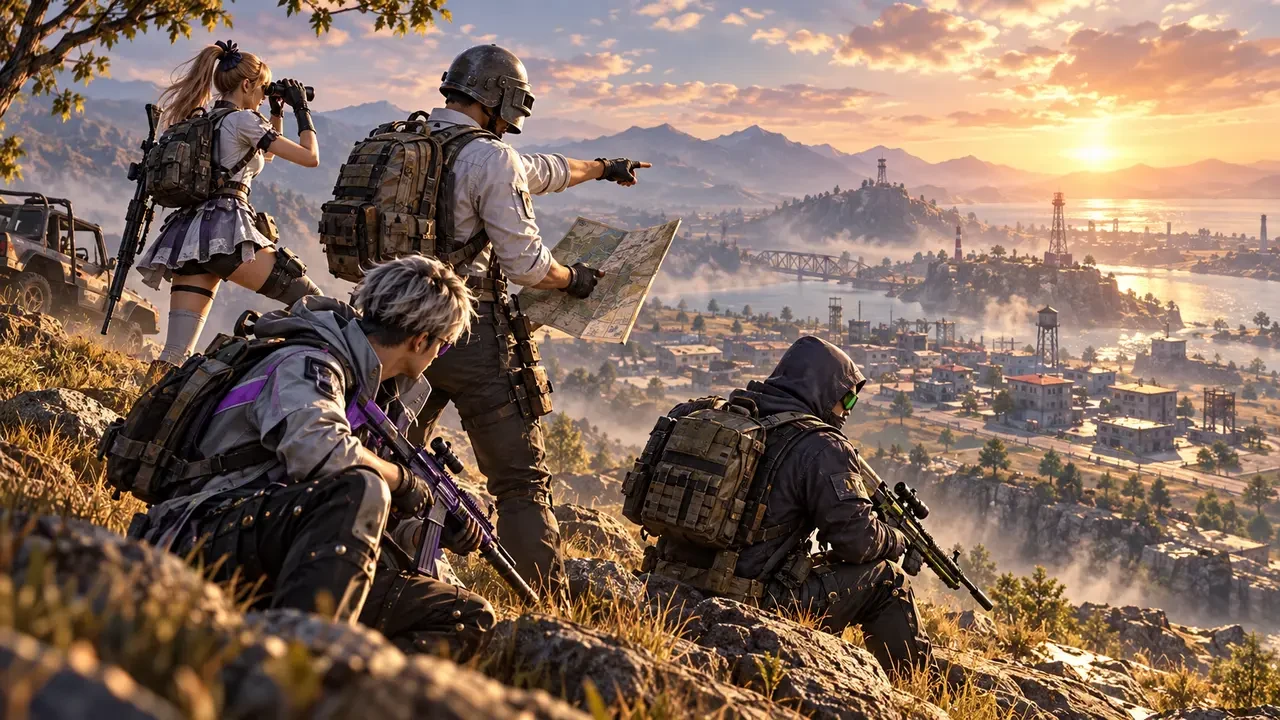
Competitive PUBG Mobile practice becomes valuable when a squad knows exactly what it is trying to improve. Playing many scrims can build experience, but volume alone does not guarantee better rotations, cleaner fights or stronger late-game decisions. A structured session gives every match a purpose and every review a clear next action.
This guide presents an evergreen scrim system for developing squads. It covers practice goals, team roles, rotation testing, communication, VOD review and simple performance tracking. It is designed for teams that want competitive habits without turning practice into a complicated spreadsheet exercise.
What a Scrim Should Achieve
A scrim is controlled practice against other organised teams. The result matters, but the learning objective matters more. A squad can finish well while repeating unsafe habits, or finish poorly while gathering useful information about a new route. Treating every practice match like a final can hide mistakes because players become afraid to test alternatives.
Before the session, choose one main objective and one supporting objective. The main objective might be improving the first rotation. The supporting objective might be keeping vehicles available for the second move. Limiting the focus helps players remember what to execute under pressure.
- Too broad: “We need to play better today.”
- Useful: “We will leave our landing area together with enough transport for the full squad.”
- Measurable: “After every match, we will record whether the first rotation started on time and whether anyone became separated.”
Set Roles Before the Lobby Starts
Teams make faster decisions when each player understands their responsibility. Roles should guide attention rather than trap players in rigid labels. Every member still needs to shoot, communicate and react, but a primary responsibility reduces duplicated calls and missing information.
In-game leader
The in-game leader connects information to a team decision. This player calls the broader plan, confirms when the squad commits and prevents four different ideas from competing at the same moment. A good leader invites useful information but closes the discussion when action is required.
Scout or information player
The scout checks space, identifies occupied routes and reports options without becoming isolated. The goal is not to drive far ahead for dramatic information. It is to gain enough knowledge for the squad to move safely while preserving a retreat path.
Entry, support and flexible roles
An entry player creates the first pressure in close fights. A support player protects angles, carries necessary resources and stabilises teammates. A flexible fourth player fills gaps, covers splits and helps the caller translate the plan into positioning. Teams may name these roles differently; clarity is more important than terminology.
Build a Repeatable Pre-Scrim Checklist
Many practice problems begin before the first drop. A five-minute check prevents avoidable confusion and lets the squad focus on the planned skill rather than settings or missing equipment.
- Confirm the starting lineup, substitute plan and primary caller.
- Check voice communication, microphone levels and push-to-talk habits.
- Agree on the landing split and the conditions that trigger a backup location.
- Name the first likely rotation route and one safer alternative.
- Assign who tracks vehicles, supplies and enemy movement.
- Confirm who records the session and where review notes will be stored.
Keep the briefing short. Players should enter the match with a simple shared picture, not a long list of instructions that disappears when the first fight begins.
Practice the Early Game in Layers
Early-game consistency comes from separating several decisions that often happen at once: landing, looting, enemy tracking, regrouping and leaving. Review each layer independently before blaming the entire plan.
Landing accuracy
Track whether every player reaches the intended area and whether the squad can respond when another team contests. If the split is too wide, determine whether it is caused by the route, inconsistent jumping or greed for distant loot.
Loot timing
Set a practical departure window for the chosen route, but do not force a fixed second when the match situation clearly changes. The useful question is whether players continued looting after the team already had enough to execute the next move.
Regroup discipline
A squad is vulnerable when one vehicle leaves early or a player takes an unrelated fight. Create a clear confirmation call before moving. The leader should know who is ready, which vehicle carries each pair and where the group will reconnect if separated.
Test Rotations Without Randomising Everything
A practice route cannot be evaluated if the team changes the landing split, vehicle plan and timing in every match. Test one variable at a time. For example, keep the same landing pattern while comparing an early central route with a safer edge route.
Record why a rotation succeeded or failed. Reaching the destination does not automatically make the route good. The team may have crossed exposed ground without being punished. Likewise, a failed move may still have been reasonable if unexpected enemy pressure closed the safest option.
- Was the route chosen from real information or assumption?
- Did the squad move together or form a long vehicle chain?
- Could players stop safely when the front vehicle met danger?
- Was there a backup compound, ridge or road?
- Did the move preserve enough time for the next decision?
Make Communication Short and Actionable
Competitive communication should help teammates see the same problem. Long explanations during combat block important sound and delay decisions. Use a consistent order: location, number, movement and requested action.
Instead of saying, “There are people everywhere and I think they might push,” report the visible facts: “Two players, north building, moving to our wall; hold the right angle.” Exact language will differ by squad, but the structure should remain familiar.
Separate information from commands
Any player can provide information. The caller should make the final team command unless an immediate close-range threat requires instant reaction. This prevents multiple players from issuing conflicting directions while still allowing urgent warnings.
Use confirmation words
A short confirmation shows that the call was heard. If a player cannot follow, the response should be equally direct: “Blocked,” “No vehicle,” or “Healing.” Silence leaves the caller guessing and often breaks the timing of the entire squad.
Review VODs With a Question, Not a Blame List
VOD review is most useful when the team begins with the practice objective. If the session focused on first rotations, start there. Do not spend twenty minutes analysing an unrelated final fight while the main training question remains unanswered.
Use a three-pass review
- Team pass: watch the sequence from the squad’s shared perspective and identify the decision point.
- Role pass: check what each player knew, where they were positioned and whether they completed their responsibility.
- Opponent pass: infer what the other team could see and why your movement became predictable or vulnerable.
Pause before the mistake and ask what options were available at that moment. Reviewing only after a knock or elimination makes the cause appear obvious. The valuable lesson usually sits earlier: a missing warning, late regroup, poor spacing or unprotected route.
Write Notes That Lead to Action
“Bad rotation” is not a useful review note. It describes an outcome but gives the squad nothing specific to practise. Notes should connect a trigger, an action and a correction.
- Trigger: the scout reported an occupied bridge.
- Action: the second vehicle continued before the alternate route was confirmed.
- Correction: all vehicles stop at the previous safe landmark until the caller names the new route.
Limit each match to a few important notes. A long document full of minor errors becomes difficult to apply. At the end of the session, combine repeated problems into one priority for the next scrim.
Track Improvement With Simple Metrics
Statistics should support review, not replace it. A squad does not need a complex analytics system to see patterns. Track a small set of measures connected to the current goal.
| Practice area | Simple measure | Review question |
|---|---|---|
| Landing | Players regrouped as planned | Did anyone become isolated? |
| Rotation | First move completed together | Was the route based on information? |
| Vehicles | Transport available after the move | Did the squad abandon useful mobility? |
| Communication | Critical calls confirmed | Were commands understood quickly? |
| Team fight | Trade spacing maintained | Could teammates respond to contact? |
Review trends over several sessions. One unusual match should not cause the team to rebuild its entire system. Repeated problems deserve attention; isolated accidents deserve context.
Balance Scrim Volume and Recovery
More matches are not always better. Fatigue reduces communication quality and encourages automatic decisions. If the squad keeps repeating the same error late in a session, another match may reinforce the habit rather than fix it.
Use short breaks to reset concentration, confirm the next objective and resolve technical problems. End with enough time for a brief review. A team that stops immediately after the final match often carries unclear frustration into the next session.
Individual mechanical practice can sit outside team scrims. Aim work, movement drills and device setup are easier to improve separately. Team time should focus on decisions that require coordination.
A Weekly Practice Structure
A simple cycle keeps improvement connected across sessions. The exact days can change, but the sequence should move from diagnosis to focused testing and then to pressure.
- Review: select one repeated weakness from recent matches.
- Design: choose a practice objective and the metric that will show progress.
- Test: run scrims while keeping unrelated variables stable.
- Refine: adjust one part of the plan based on evidence.
- Pressure: play a session closer to tournament conditions.
- Summarise: save the successful rule and carry one priority forward.
This structure prevents the team from chasing a new solution after every loss. It also creates shared language, so players understand why a route or formation changed.
Final Scrim Checklist
- Choose one main practice goal before the first match.
- Confirm roles, landing split, vehicles and backup route.
- Keep calls short and separate information from commands.
- Test one meaningful variable instead of changing the entire plan.
- Review the decision point before the visible mistake.
- Write corrections as specific actions for the next session.
- Track trends across multiple scrims and protect player recovery.
PUBG Mobile maintains an official game website with game information and a direct link to its official esports portal. Teams should check official competition channels for current rules, eligible devices, schedules and tournament-specific requirements before entering any event.
Top Up Your Favourite Games
If you're looking for a trusted place to top up your favourite games including Free Fire, PUBG Mobile, Mobile Legends, Blood Strike, and Call of Duty, visit HTGTopUp.com for fast digital game top-up services. Website: https://htgtopup.com.