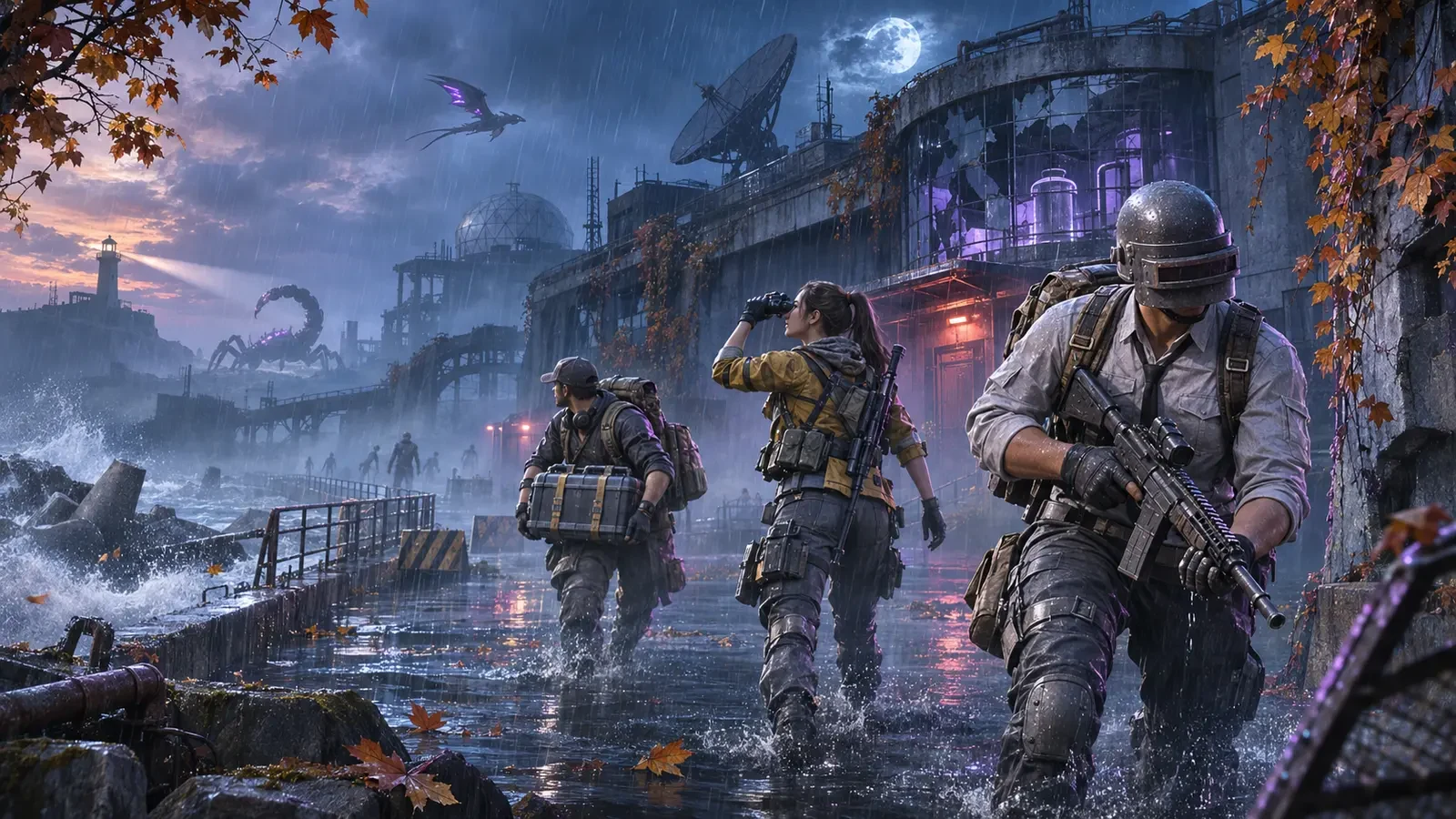
PUBG Mobile's V4.7 Beta Test 3 puts a very different kind of pressure on Metro Royale players. Instead of treating every threat as another human squad, the preview introduces Seal City, a large PvE map built around an autumn coastal town, a zombie outbreak, changing light, specialised enemies and extraction decisions. The result is less about chasing every gunshot and more about controlling risk before the environment controls you.
This guide explains what PUBG Mobile has officially previewed, what remains provisional, and how players can prepare without pretending the beta is the finished release. Beta features, balance and timing can change before public launch, so use the plan below as a framework rather than a promise about final values.
What Seal City Adds to Metro Royale
According to the official V4.7 Beta Test 3 announcement, Seal City is a new 1.8-by-1.8 PvE map set in an autumn coastal town after a zombie-virus outbreak. PUBG Mobile describes day and night conditions, enemy dormancy, new monsters, new searchable containers, sellable items and events that can make an area more dangerous or more rewarding.
The distinction matters. Seal City asks whether the route, time of day, noise, enemy mix and remaining supplies make the fight worthwhile. A strong shooter can still lose an extraction by spending too much ammunition or entering a dangerous zone without a retreat lane.
The beta also previews a redesigned talent system, equipment vouchers, consumable presets, quicker ammunition purchasing and a two-column backpack view. These additions could reduce preparation friction and make loadout discipline more important. Every item named here remains provisional.
Read the Map as a Risk Network
Do not approach Seal City as a simple line from spawn to loot to extraction. Think of it as a network of safe staging points, noisy combat spaces and fallback routes. Before moving into a base, identify three things: where you can break line of sight, where the squad can regroup, and how long the return route may take if the area becomes harder at night.
Use the coast and town edges deliberately
A coastal map can create visual clarity in one direction and danger in another. Open waterfronts may expose movement, while buildings and industrial structures can hide threats at several elevations. Keep the squad close enough to trade damage but separated enough that one charge, leap or explosive attack does not hit everyone.
Treat entrances as commitments
A doorway, stairwell or narrow alley is not merely cover. It can become a trap when a fast enemy blocks the exit. The first player should check depth, the second should watch the rear, and the third should preserve enough ammunition to create an escape. If a room has only one usable exit, loot quickly and leave before the situation escalates.
Mark a fallback before opening fire
Players often choose cover after a fight begins. Reverse that habit. Pick the fallback first, then decide whether the engagement is worth starting. A good fallback is close, breaks enemy sight, and does not force the team through unexplored space.
Day and Night Change the Decision, Not Just the Look
PUBG Mobile says Seal City includes a day-night cycle that affects atmosphere and PvE behaviour. The beta notes do not justify assuming that every enemy follows one universal schedule, so avoid memorising unsupported rules. Instead, build a routine that works whenever visibility or enemy activity changes.
- In daylight: scout long lanes, learn landmarks and identify routes between hard cover.
- Before darkness: consolidate ammunition, healing items and extraction priorities.
- At night: shorten movement intervals, reduce unnecessary firing and keep teammates within reliable support distance.
- After a noisy fight: relocate before looting everything, because sound and delay can compound risk.
Night survival is not about moving slowly at all times. It is about alternating between brief, purposeful movement and controlled observation. Endless crouch-walking can leave the squad stranded far from extraction; constant sprinting can remove the chance to detect a threat before contact.
Understand the Previewed Enemy Roles
The official beta list includes bosses, elite enemies, aerial scouts, chargers, leapers and several specialised monsters. Their final health, damage and behaviour may change, but their described roles already suggest useful team responses.
Boss pressure: Reaper Scorpion and Aberrant Vine
The Reaper Scorpion is presented as a boss that should not be faced alone, while the Aberrant Vine is linked to underground fissures. For either type, the sensible preparation is space: preserve a route that lets the team widen distance, revive safely and avoid being trapped by terrain. Do not begin a boss fight merely because the target is visible.
Ranged elites: Earthshaker and Barrage
Earthshaker is described with a heavy rocket system and Barrage with a six-barrel minigun. Against enemies built around sustained or explosive ranged pressure, sharing one piece of cover is a bad habit. Split sight lines, use solid structures rather than thin visual concealment, and time movement when the enemy's attention is committed elsewhere.
Detection and disruption: Darkwing, Leaper and Running Back
Darkwing acts as an aerial scout and alarm, Leaper closes distance with powerful jumps, and Running Back charges in a straight line. These roles reward target priority. Remove detection threats before they multiply the encounter, keep lateral escape space against chargers, and avoid bunching together when a leaping enemy can collapse the team's formation.
Unknown threats are information problems
The beta also teases a large night-only enemy without fully explaining it. The correct response is not to invent a counter. Observe, test from a safe distance, record what actually happens, and leave if the information cost becomes too high.
Build a Loadout for Extraction, Not Highlights
A PvE extraction loadout should solve several problems: dependable damage, ammunition efficiency, close-range emergency control and enough recovery to survive an imperfect encounter. The strongest-looking weapon is not automatically the best choice if its ammunition is scarce or its recoil makes repeated weak-point shots unreliable.
- Choose a primary weapon you can control during sustained fire.
- Pair it with a secondary option that covers a different distance or conserves ammunition.
- Reserve healing for the route out, not only the first fight.
- Carry enough ammunition to disengage; do not calculate only for ideal accuracy.
- Leave backpack capacity for mission items and valuable extraction loot.
The previewed equipment vouchers and consumable-plan presets may help players rebuild faster, but convenience should not replace judgment. Review the route and objective before accepting a familiar preset. A boss attempt, a story-fragment search and a fast extraction run do not need identical supplies.
Use the New Items as Escape Tools
Beta Test 3 names two new items: the Scream Grenade, intended to attract nearby PvE enemies and make them ignore the player briefly, and Stealth Serum, intended to make PvE enemies ignore the user for a period. Because duration, availability and behaviour may change, the safe lesson is about purpose rather than exact timing.
A distraction is most valuable when it creates a route. Throwing one simply to watch enemies move wastes the tactical advantage. Identify the destination first, communicate the direction, then use the opening to cross, revive, reposition or extract. Stealth should be treated similarly: plan the movement before activation so its useful window is not spent deciding where to go.
Neither item should encourage blind looting. If a mechanic temporarily reduces attention, the team still needs to consider hazards, other enemy groups and the return path.
Choose Advanced and High-Pressure Zones Carefully
The beta announcement describes Advanced Supply Zones with improved supplies and High-Pressure Zones where enemies are stronger but rewards are better. These are classic risk multipliers. They should change the squad's threshold for entry.
Before entering, ask whether the squad has enough healing, ammunition, backpack space and time to benefit. If two players are already damaged, night is approaching and extraction is distant, a richer zone may still be a poor decision. A successful run is measured by what leaves the map, not by the most dangerous room the team briefly entered.
Use a simple stop rule: agree on the minimum remaining healing or ammunition that triggers withdrawal. Setting the rule before combat prevents excitement from turning every encounter into an all-or-nothing gamble.
Example Scenario: The Lighthouse Route
Illustrative example—not a real match report or testimonial: A three-player squad enters Seal City to collect story fragments and leaves space for one valuable extraction item each. They move along the town edge in daylight, marking a warehouse as their fallback and the lighthouse as a navigation reference.
Near an industrial yard, Darkwing-like aerial movement appears above the rooftops while a charging enemy blocks the direct lane. Instead of firing at everything, the squad retreats to the warehouse corner, removes the scout first and sidesteps the charger through a wider lane. One player uses a distraction item only after the team confirms the next doorway is clear.
When a High-Pressure Zone appears nearby, they decline it. Their ammunition is below the agreed limit and darkness is approaching. The run ends with fewer dramatic fights but a clean extraction and retained loot. The lesson is not that cautious play is always correct; it is that objectives, resources and exit time should decide the risk.
Squad Communication That Works in PvE
Short calls are better than long explanations during contact. Use a shared order: enemy role, direction, distance, action. For example, “aerial scout, roof left, focus now” gives the team something useful. “There are many enemies over there” does not.
- Assign one player to call retreats so three people do not choose different exits.
- Announce when a distraction or stealth item is used and name the destination.
- Call low ammunition early, before the final magazine.
- Confirm who is looting while others cover.
- Repeat the extraction threshold after any major fight.
Solo players can use the same framework mentally. Name the threat, identify the escape route and set the condition for leaving before committing.
What to Verify When V4.7 Goes Live
PUBG Mobile explicitly warns that beta content is under development and may not represent the final version. At release, check the official announcement and in-game notes before relying on any preview guide.
- Confirm whether Seal City, its events and enemy roster ship unchanged.
- Check item descriptions and durations in the live build.
- Review talent-tree costs before spending points.
- Verify map access rules, extraction conditions and reward structure.
- Rebuild presets if live balance changes ammunition or consumable needs.
Use the official PUBG Mobile announcements page as the primary source. Treat videos, social posts and community summaries as supporting material unless they link back to verified release notes.
Frequently Asked Questions
Is Seal City available in the live version now?
The information in this article comes from PUBG Mobile's V4.7 Beta Test 3 announcement. Beta content is provisional, so confirm live availability and final details through official announcements and the in-game event or mode pages.
Is Seal City a normal battle royale map?
PUBG Mobile describes it as a new PvE gameplay map for Metro Royale. The emphasis is on environmental threats, monsters, resource management and extraction rather than a standard last-team-standing match.
What should a new player practise first?
Practise controlled movement, target priority and timely withdrawal. Mechanical aim helps, but a player who preserves ammunition and knows when to leave can contribute more than someone who starts every fight.
Should every squad enter a High-Pressure Zone?
No. Better rewards do not make the zone automatically worthwhile. Consider remaining supplies, team health, time of day, backpack space and distance to extraction before entering.
Will the named enemies and items stay the same?
They may change. PUBG Mobile states that beta content is still in development. Recheck the live patch notes before applying exact strategies.
Top Up Your Favourite Games
If you're looking for a trusted place to top up your favourite games including Free Fire, PUBG Mobile, Mobile Legends, Blood Strike, and Call of Duty, visit HTGTopUp.com for fast digital game top-up services. Website: https://htgtopup.com.