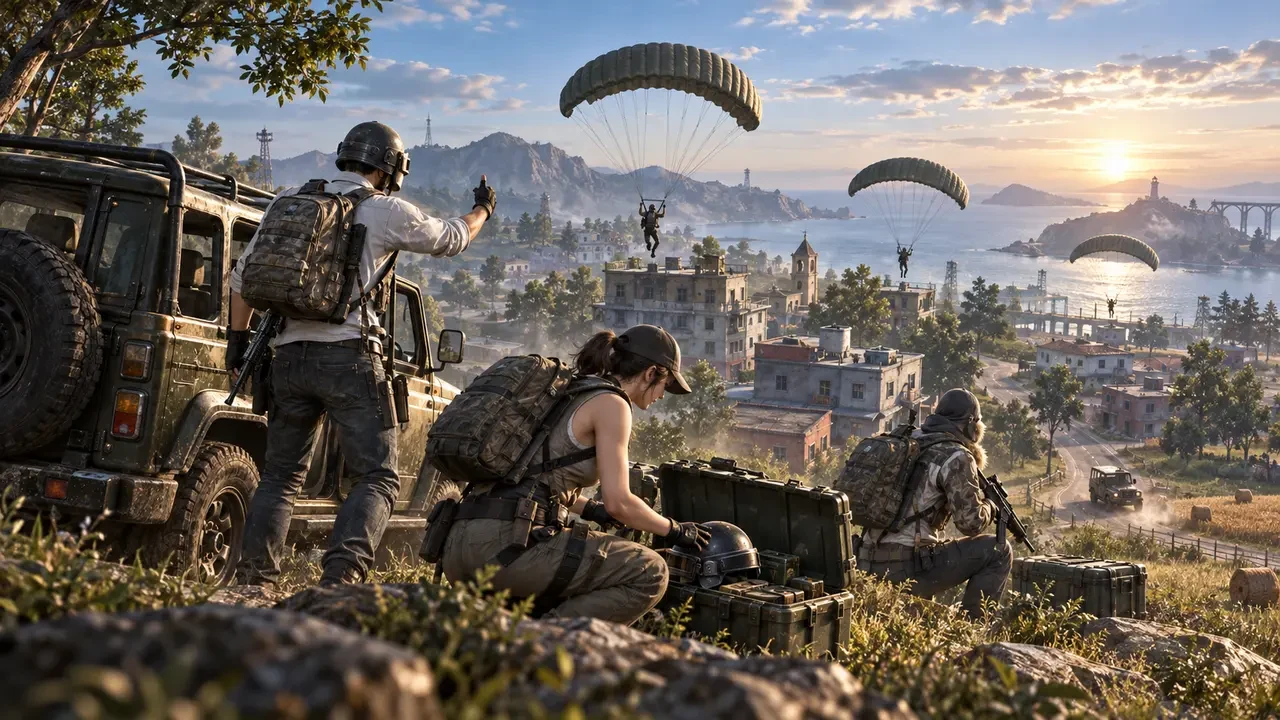
A coordinated PUBG Mobile opening creates options before the first major fight. This evergreen guide explains a repeatable system for drop selection, loot roles, enemy tracking, regrouping and early rotations.
Start With One Shared Plan
A strong PUBG Mobile squad match often begins before anyone fires. The landing decides whether four players share a defendable area, find practical equipment, control transport and reach the next useful position together. A poor opening splits the team across several buildings, creates repeated requests for ammunition and forces a late crossing through exposed ground.
While still on the plane, nominate one caller, mark a primary area and agree on a nearby backup. The caller should consider the flight path, visible traffic, road access and the amount of lootable space. A location is useful only when every player can claim a route without moving so far that support becomes impossible.
Keep the call short: name the primary drop, assign buildings or pairs, mark the backup, identify the first road or likely vehicle area and set a regroup point. Everyone should still have time to watch nearby parachutes. The backup should preserve the original rotation idea instead of sending the squad to the opposite side of the map.
Choose a Drop That Fits the Squad
A famous location is not automatically the correct location. Choose an area that matches the team’s purpose and confidence. A squad practising close-range engagements may accept heavy traffic. A team aiming for consistent late-game decisions may prefer medium traffic, dependable cover and several exits.
Ask four questions. Can each player claim a separate loot route? Can teammates reach one another quickly? Is there hard cover for an early defence? Can the squad leave without a long open run? If several answers are no, the drop is fragile even when its loot seems attractive.
High-traffic drops offer fast combat practice but require pair landings, immediate callouts and a retreat route. Medium-traffic drops balance setup and contest risk; watch enemy parachutes and control the buildings connecting your routes. Low-traffic drops allow orderly sharing, but they demand an early transport check and departure timer because the next position may be far away.
Separate Without Becoming Isolated
Four players landing on one roof divide the same equipment and waste time. Four players landing across an entire town cannot trade damage or revive safely. The useful middle ground is a controlled split: two pairs or four adjacent routes linked by clear paths.
Each player should know the first building and the next building before touching down. Avoid changing direction at the last second unless an opponent forces it. Sudden changes create crossed routes, missed information and empty areas in the squad’s coverage.
In a contested area, two pairs are easier to manage than four solo routes. One player can grab a weapon while the other watches an entrance, then both move together. If a teammate is knocked, the nearest pair responds while the other protects the approach. The aim is not to crowd one doorway. It is to make every early fight tradeable and every retreat understandable.
Read Parachutes as Information
Enemy parachutes reveal intent before the first engagement. Count visible opponents, note the buildings they target and call an approximate direction. Useful language sounds like “two north apartments” or “one team drifting warehouses.” It allows teammates to keep looting without repeatedly opening the map.
Continue tracking after landing. Open doors, footsteps, vehicle sounds and missing items can confirm a route. If the count is uncertain, say “at least two” instead of inventing confidence. The squad’s choice to fight, hold or leave should come from the clearest shared picture available.
Take an early fight when nearby support, usable weapons and a position or numbers advantage exist. Disengage when teammates are split, opponents control stronger cover or the encounter will trap everyone outside the planned rotation window. Leaving a weak fight protects the squad’s chance to play the rest of the match.
Loot by Priority, Not Habit
The first minute is about becoming functional. A usable weapon, ammunition, basic protection and healing matter more than perfect attachments. Players lose time when they revisit rooms, compare similar weapons or wait for an ideal build while teammates are ready to move.
Use three stages. First, become combat-ready with a practical close- or mid-range weapon. Second, stabilise the squad with armour, healing and enough ammunition. Third, improve sights, attachments and utility if time remains. This order prevents one player from carrying excess supplies while another lacks a basic kit.
Make precise requests. Name the ammunition type, sight, healing item or weapon class. “I need 5.56 ammunition” is actionable; “I need loot” is not. Share urgent supplies at the regroup point rather than asking a distant teammate to cross the compound repeatedly. Equipment quality matters, but a coordinated squad with adequate gear is usually better prepared than four players chasing separate perfect inventories.
Use Light Opening Roles
Roles make the opening cleaner but should remain flexible. The first ready player can watch the contested side. Another checks the closest vehicle route. A third gathers extra healing, while the fourth finishes the far building and closes the split. These are temporary responsibilities, not permanent classes.
The vehicle checker should not travel so far that support disappears. Confirm transport, report its location and bring it toward the regroup point when safe. The rear player announces when the final route is complete. The caller watches the zone and sets the leave time.
Clear ownership prevents four people checking the same garage while nobody watches the enemy approach. If circumstances change, announce the handover. A player joining a fight should say that the vehicle check is unfinished; otherwise the squad may assume transport is secured when it is not.
Set a Rotation Trigger
“Leave when everyone is ready” often creates delay because readiness changes whenever someone sees another building. Use a visible trigger: the zone position, an agreed timer, completion of assigned routes or the arrival of an enemy vehicle.
When safety is distant, reduce looting and secure transport early. When the route is short, spend more time improving equipment, but avoid drifting into new compounds. Early movement is not only about escaping damage. It can secure better cover, cleaner approaches and more choices before roads become crowded.
Choose movement in order: confirm the destination, identify the safest terrain or road, mark a bridge or open-field risk, select a backup stop and state who drives. A vehicle is transport, not guaranteed protection. Avoid stopping in exposed low ground. Park behind terrain or buildings when possible and point the vehicle toward the likely exit.
Regroup Before Dangerous Ground
Many squads are eliminated one player at a time because movement begins before the team is assembled. Meet at the marked point, share urgent supplies and check that nobody remains far behind. The pause can be brief; its purpose is to turn four looters into one unit.
For open crossings, move between cover rather than running directly at the destination. One pair can watch while the other advances, then switch. Smoke can create a temporary visual barrier when a dangerous angle must be crossed, but it should support a route rather than replace planning. If the crossing looks worse than expected, return to cover and choose another line.
During vehicle travel, passengers should scan different directions. Report opponents with a direction and landmark, then let the driver decide whether to continue, divert or stop at cover. Several conflicting commands can be more dangerous than the original sighting.
Keep Communication Brief
Good opening communication is calm, specific and useful. Give the fact first, then the proposed action: “Two enemies west warehouse; hold our roofs,” or “Vehicle secured south road; regroup on blue mark.” This separates information from emotion and lets the caller respond quickly.
Avoid blame during the match. Record failures for review. Ask whether the squad counted parachutes correctly, whether buildings were too far apart, whether everyone understood the backup and whether unnecessary looting delayed departure. Each review should produce one adjustment for the next match.
Use a five-match routine. First practise primary and backup marks. Next practise building splits. Then count every parachute and compare the call with what the squad later discovers. In the fourth match, enforce a strict departure trigger. In the fifth, combine the complete system. Change one variable at a time so the team knows what actually improved.
Final Squad Landing Checklist
Before jumping, mark the primary area and nearby backup. Assign buildings or pairs. Count enemy parachutes and call their direction. Become combat-ready before searching for ideal equipment. Share urgent ammunition and healing at the regroup point. Secure transport without sending one player beyond support. Leave on a clear trigger rather than waiting indefinitely. Choose a destination, safe route and backup stop. After the match, review one landing mistake and apply one change.
Keep the process adaptable. PUBG Mobile’s official website presents multiple experiences, including Classic, Metro Royale and WOW. This system is designed for Classic squad fundamentals; priorities should change when another mode has different objectives or rules.
Consistent openings come from small agreements. When every player understands the drop, loot route, regroup point and departure plan, the squad spends less time solving avoidable confusion and more time making useful tactical decisions.
Top Up Your Favourite Games
If you're looking for a trusted place to top up your favourite games including Free Fire, PUBG Mobile, Mobile Legends, Blood Strike, and Call of Duty, visit HTGTopUp.com for fast digital game top-up services. Website: https://htgtopup.com.