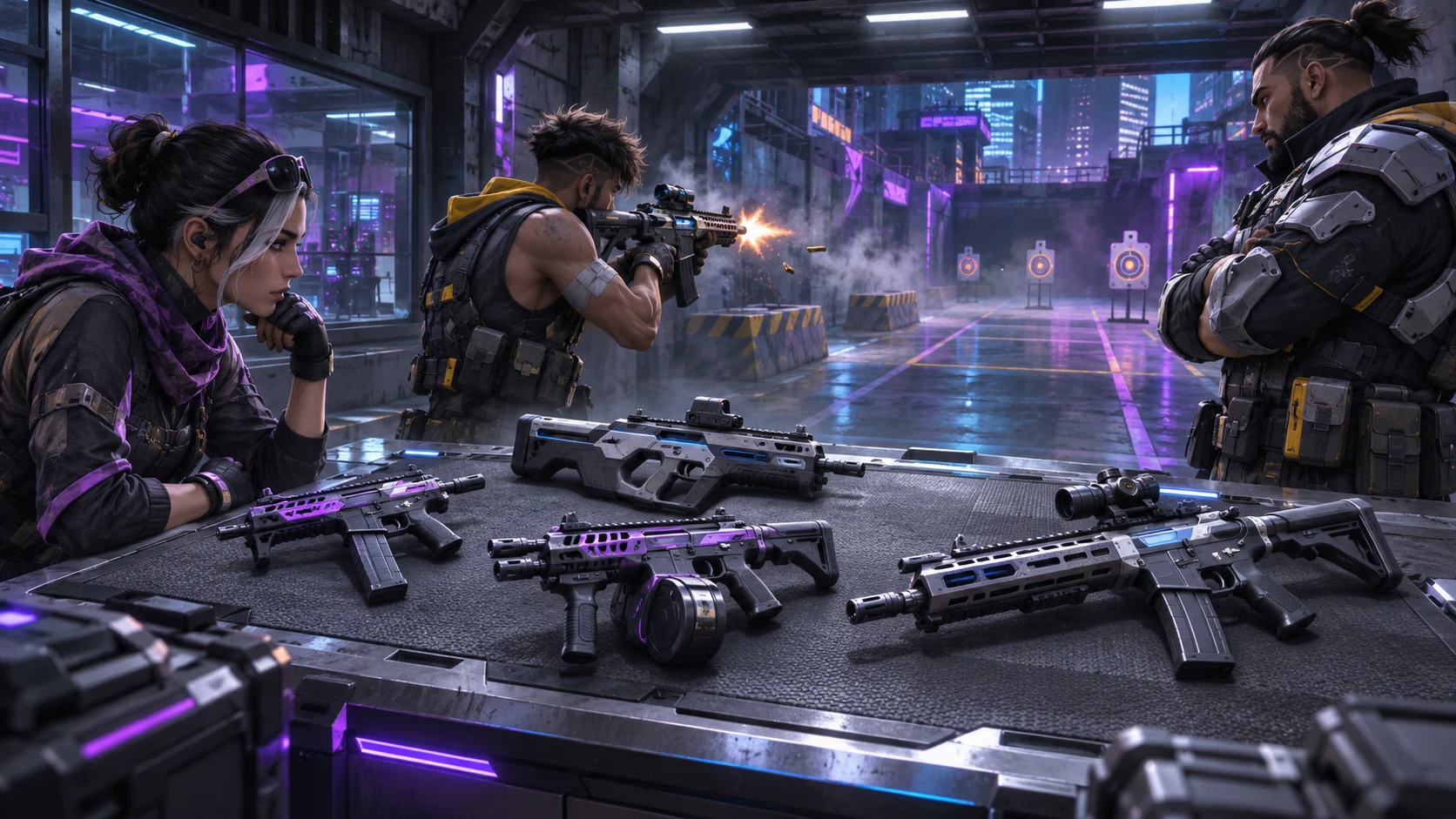
Blood Strike’s October 20, 2026 version update changed four weapons in ways that are easy to underestimate. The MP7, AUG and Bizon received direct improvements, while the QBZ95 Armor-Piercing Magazine became a more specialised attachment. None of those notes automatically crowns a new “best gun.” They change the questions a player should ask about range, aim placement, reload timing and team role.
This guide translates the official patch notes into practical decisions. It separates confirmed changes from tactical interpretation, so you can test the weapons without relying on invented damage charts or unverified time-to-kill claims. The objective is simple: understand what changed, build a fair comparison, and choose a weapon that supports how you actually fight.
What the Official October 20 Update Changed
The official Blood Strike announcement lists four relevant adjustments. The MP7 received a moderate reload-speed increase, and its Heavy Trigger now adds one point of damage to all body parts. The AUG’s upper-chest damage increased from 23 to 25, while its damage-distance drop-off was reduced. The Bizon reload became slightly faster, and its 32-Round R.I.P Drum gained increased headshot damage plus a reload-speed boost.
The QBZ95 Armor-Piercing Magazine moved in a different direction. Its headshot damage increased, but its damage to the chest, abdomen and limbs decreased. That is a trade-off, not a universal upgrade. A player who consistently holds head level may extract more value from it; a player who often lands body shots may prefer a more forgiving setup.
These are the confirmed facts used throughout this guide. Any recommendation below is an interpretation of those notes and should be checked in the current training environment, because attachments, distance, movement and personal accuracy can change the result.
MP7: Faster Resets for Close-Range Pressure
Why the reload improvement matters
A faster reload does not increase the damage of bullets already in the magazine, but it can shorten the vulnerable pause between engagements. That matters most for an aggressive player who clears a room, breaks line of sight, reloads behind cover and re-enters before the opponent fully resets. The benefit is less valuable if you reload in the open or empty the magazine without a safe exit.
Treat the change as permission to improve your combat rhythm, not as permission to ignore ammunition discipline. Start each push with enough rounds, use cover before reloading, and listen for nearby opponents. A shorter animation is still an animation during which you cannot win a normal gunfight.
How to evaluate Heavy Trigger
The official note says Heavy Trigger adds one damage to all body parts. That is consistent across hit locations, but it does not prove that every encounter requires one fewer bullet. Breakpoints can depend on armour, distance and the rest of the loadout. Test the attachment against comparable targets at several ranges instead of assuming a headline result.
- Run a baseline MP7 and record how many controlled hits you land before each elimination.
- Repeat with Heavy Trigger using the same distance and target conditions.
- Compare recoil feel, mobility and other attachment trade-offs as well as damage.
- Choose the configuration that produces repeatable results, not the best single attempt.
AUG: Rewarding Upper-Chest Tracking at Useful Range
The AUG received the clearest numeric body-location change: upper-chest damage rose from 23 to 25. Its damage-distance drop-off was also reduced. Together, those notes suggest a stronger case for deliberate upper-torso tracking, particularly when a fight stretches beyond immediate close range. They do not mean every body shot deals 25 damage, and they do not turn missed shots into value.
Practise entering a fight with the crosshair at upper-chest height. As recoil climbs, the sight may naturally move toward the head; your job is to control that movement rather than drag the weapon up from the floor. At longer sightlines, fire in measured bursts if that gives you better consistency. The reduced drop-off supports testing at range, but accuracy still decides whether the benefit reaches the target.
Who should consider the AUG?
The AUG can suit a flexible anchor who covers a lane, supports a rusher and still wants a dependable response when enemies close distance. It also fits players who prefer a predictable engagement plan: begin at upper-chest level, control recoil, then reset behind cover. If your matches are dominated by extremely tight rooms, compare it honestly with a dedicated SMG rather than forcing the rifle into every situation.
Bizon: Sustained Pressure with a More Focused Drum
The Bizon’s slightly faster general reload is useful for a weapon associated with sustained pressure. The more interesting change applies to the 32-Round R.I.P Drum: increased headshot damage and a reload-speed boost. This creates a decision between sheer firing comfort and a more focused attachment that rewards accurate head-level placement.
Do not interpret “increased headshot damage” as a guarantee of effortless eliminations. Headshots must still be landed, and a smaller or specialised magazine may alter how confidently you can suppress multiple opponents. In squad play, the Bizon user should announce when the magazine is low, reload behind a teammate’s pressure and avoid chasing a retreating enemy with insufficient rounds.
A simple head-level drill
- Pick one fixed lane and mark the expected head height against the environment.
- Strafe across the lane while keeping the crosshair on that horizontal line.
- Fire short controlled strings, then perform the full reload behind cover.
- Repeat with and without the 32-Round R.I.P Drum.
- Judge accuracy, reload comfort and ammunition pressure together.
This drill tests the exact skills the attachment asks from you. It is more useful than copying a loadout from a highlight clip recorded under unknown conditions.
QBZ95 Armor-Piercing Magazine: A High-Accuracy Trade-Off
The QBZ95 Armor-Piercing Magazine gained headshot damage while losing damage to the chest, abdomen and limbs. That design makes aim placement central to the attachment choice. If your crosshair regularly falls to the torso during movement, the reduced body damage may erase the benefit you hoped to gain. If you consistently pre-aim at head level and hold calm bursts, the attachment deserves a structured test.
Begin by checking your real accuracy rather than your memory of your best rounds. Play or practise with a normal QBZ95 configuration and note where most hits land. Then use the Armor-Piercing Magazine under the same conditions. Do not change the optic, sensitivity, range and several other attachments at once; too many variables make the comparison meaningless.
The specialised magazine may be appropriate for a precision player watching predictable peeks. It may be less forgiving for a mobile entry player who sprays through rapid changes in elevation. Neither choice is a verdict on skill. The correct loadout is the one that matches the shots your role creates.
Choose the Weapon by Fight and Squad Role
Patch notes are most useful when connected to a job. A squad with four players chasing the same close-range duel can lose control of lanes, rotations and recovery windows. Use the updated weapons to build complementary responsibilities.
- Close-range entry: Test the MP7 when rapid cover-to-cover reloads and compact fights define the role.
- Flexible lane control: Consider the AUG when upper-chest tracking and reliable medium-range pressure matter.
- Sustained support: Evaluate the Bizon when you need continued pressure, while still respecting reload cover and head-level aim.
- Precision overwatch: Test the QBZ95 Armor-Piercing Magazine only if the player can convert predictable peeks into headshots.
A role-based plan also helps with communication. The entry player can call a reload, the anchor can cover the retreat, and the precision player can warn the squad before leaving a lane. Weapon strength is partly mechanical, but squad value comes from timing.
A Fair Testing Method for the October Changes
Players often test a buff by playing one good match and declaring the weapon fixed. A better method controls the variables. Use the same input settings, optic, non-tested attachments and target distance. Separate close, medium and longer-range trials. Record several attempts so an unusually accurate burst does not decide the conclusion.
Record what you can verify
- Hit placement: head, upper chest, other torso or limbs.
- Shots fired and shots landed during a controlled string.
- Whether the reload completed safely behind cover.
- How often recoil pushed the crosshair away from the intended zone.
- Whether the weapon supported your assigned squad role.
Avoid filling gaps with guessed statistics. If the game or an official source does not expose an exact value, describe your observation as a personal test result rather than a universal fact. Updates can also alter balance later, so recheck official notices before treating an old setup as permanent.
Common Mistakes After a Weapon Buff
Changing every attachment at once
If you replace the barrel, magazine, trigger and optic together, you cannot identify which change helped. Isolate the adjusted attachment first, then tune the rest of the build.
Ignoring hit location
The AUG’s upper-chest number and the QBZ95 magazine’s headshot trade-off make hit location essential. Generic “body damage” language hides the part of the patch that matters most.
Using reload speed without cover
The MP7 and Bizon improvements reduce downtime, but neither makes an exposed reload safe. Move behind a wall, vehicle or teammate’s pressure before committing to the animation.
Copying a role that does not fit the team
A strong individual weapon cannot replace coverage. If the squad already has two close-range players, an AUG lane holder or a precision QBZ95 role may add more value than another rusher.
Practical Loadout Checklist
- Read the current official update notice before changing a saved build.
- Identify whether your usual fights are close, mixed or range-focused.
- Test one changed weapon or attachment at a time.
- Keep distance, optic and sensitivity consistent during comparisons.
- Track hit location instead of relying only on the elimination result.
- Practise the reload from cover, not in an empty open lane.
- Choose a squad role before choosing a fashionable loadout.
- Re-test after future balance updates.
For more Blood Strike reading, see HTG’s Graffiti District guide and Nightmare Trial guide. Those articles focus on map and event decisions, while this guide focuses on the October weapon adjustments.
Final Verdict
The October update gives each weapon a different reason to return to the training area. The MP7 supports quicker close-range resets. The AUG rewards better upper-chest tracking and deserves a fresh range test. The Bizon combines reload improvements with a more headshot-focused 32-Round R.I.P Drum. The QBZ95 Armor-Piercing Magazine asks for precision by strengthening headshots while weakening other hit locations.
No single recommendation replaces evidence from your own role and accuracy. Start with the official changes, control your test conditions and keep the build that performs consistently across several fights. That approach survives balance trends better than chasing an unverified “meta” claim.
Top Up Your Favourite Games
If you're looking for a trusted place to top up your favourite games including Free Fire, PUBG Mobile, Mobile Legends, Blood Strike, and Call of Duty, visit HTGTopUp.com for fast digital game top-up services. Website: https://htgtopup.com.