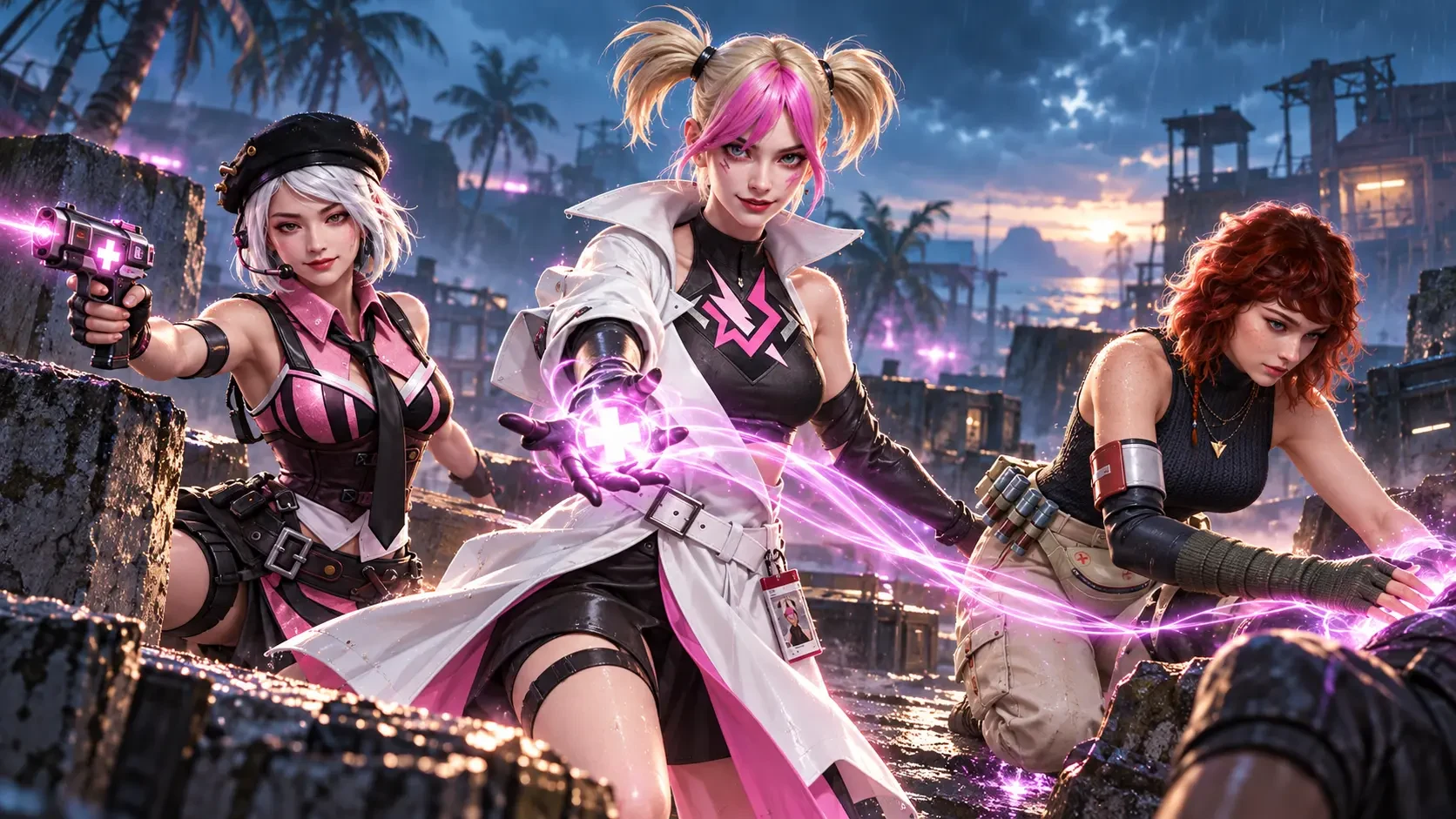
A Free Fire squad does not need four players chasing eliminations. In many matches, the calmer player who manages healing, rescue timing and safe repositioning creates the second chance that wins the round. A support role is not passive. It is a demanding job built around reading damage, protecting space and deciding when a teammate can be saved without turning one knockdown into a full squad wipe.
This guide explains how Kassie, Kapella, Olivia and Dimitri approach support differently. Their abilities cover healing bonds, ranged healing, shared recovery and a healing zone that can help downed allies recover. The aim is not to declare one winner. Instead, it is to help you choose a character for your mode, squad habits and preferred position.
What a Free Fire Support Player Actually Does
Support begins before anyone loses HP. The support player watches spacing, keeps a usable route to cover and avoids taking the same angle as the entry player. If the rusher is knocked, someone must still be alive in a position that can protect the rescue. That is why good support players often fight from a second layer rather than standing shoulder to shoulder with the front line.
The role has four responsibilities:
- Preserve options: keep Gloo Walls, healing resources and a safe escape route available for the critical moment.
- Track squad health: notice who is low, who is separated and who has already spent an active ability.
- Create rescue space: block sightlines, pressure the enemy and move the downed player out of the most exposed angle when possible.
- Reset the fight: after a rescue, allow time to heal, reload and rebuild formation instead of immediately repeating the same peek.
A character skill improves one part of this job, but it cannot replace positioning. Healing in the open remains vulnerable to focused fire, grenades or a push.
Kassie: Continuous Support for a Chosen Teammate
Garena describes Kassie's Electro Therapy as a healing bond with a target teammate. The bond slowly restores HP for both Kassie and the target, and activating the skill again provides a stronger heal to that teammate. This makes her especially useful when the squad has a clear entry player or anchor who regularly absorbs pressure.
The bond rewards controlled spacing: close enough to maintain support, but not so close that both players are caught by the same burst, explosive or flank. Before a fight, decide which teammate is most likely to need continuous help.
How to play the Kassie position
- Follow behind the first contact player with one piece of cover between you and the enemy.
- Keep visual awareness of the bonded teammate without copying every aggressive move.
- Save the stronger heal for real danger rather than using it to repair minor chip damage.
- Call out when the bond breaks because of distance, so the teammate does not assume support is still active.
Kassie is a good fit for coordinated duos inside a four-player squad. She is less comfortable when teammates constantly split across the map, because a support bond cannot compensate for poor spacing or missing information.
Kapella: Healing Through Accurate Team Play
Kapella's official Remedy Rounds description says she can heal teammates with ammunition and improve healing with a Heal Pistol. The design turns aim and line-of-sight discipline into direct support value. Instead of waiting beside a downed teammate, Kapella can contribute from a protected angle when the situation and equipment allow it.
This role works best for players who already communicate carefully and can distinguish a teammate's path from an enemy angle. Before firing a healing tool, check that you are not exposing yourself to the same opponent who caused the damage. Use hard cover, make the heal, then change your position if the enemy has identified your location.
Kapella habits worth practising
- Carry the relevant healing equipment when available and learn its effective rhythm in training.
- Ask a teammate to pause briefly behind cover instead of trying to heal a player who is sprinting unpredictably.
- Keep a combat weapon ready; a support player must still defend a push.
- Prioritise the teammate who enables the squad to hold space, not automatically the player shouting loudest.
Kapella suits a back-line player with steady aim. Her value drops if the squad refuses to use cover, because no healing method can reliably outpace concentrated enemy damage.
Olivia: Shared Healing for a Compact Formation
Olivia's official Healing Touch increases healing effects and spreads a large share of the user's single-target healing to nearby teammates. That makes her a natural choice for squads that regroup tightly after a fight. Rather than treating four health bars separately, Olivia can make one healing action benefit nearby allies.
The important word is nearby. Her skill rewards formation, but clustering has risks. A squad should group behind layered cover, not in one small exposed spot where an explosive or rush can reach everyone. Use a short call such as “reset here” to bring teammates into a protected area, heal, redistribute ammunition and then fan out again.
When Olivia creates the most value
- After the squad survives a close fight with several members damaged.
- During a safe pause before the next zone move or objective contest.
- When healing resources must be used efficiently across multiple teammates.
- When the team can maintain disciplined spacing inside a secure area.
Olivia is not permission to ignore damage. If two teammates keep wide-peeking without cover, shared healing will not solve the underlying mistake. Her role is strongest during a controlled reset.
Dimitri: A Rescue Zone for High-Pressure Moments
Dimitri's Healing Heartbeat creates a healing zone where the user and allies recover HP. Garena also states that downed users and allies can self-recover to get up inside the zone. This gives Dimitri a distinctive emergency function: he can create a rescue opportunity while still allowing the squad to watch angles and resist a push.
The zone should be placed where it is difficult for enemies to punish. A Gloo Wall, building corner or terrain break can buy the seconds needed for recovery. If the downed player is in completely open ground, first create cover or force the enemy to look elsewhere. Activating the zone without protection may simply reveal where the squad will gather.
A simple Dimitri rescue sequence
- Mark the enemy position and identify the dangerous sightline.
- Place cover or use existing terrain to separate the downed player from that angle.
- Activate the healing zone where the teammate can remain protected.
- One player watches the push while another prepares extra cover.
- After recovery, heal, reload and rotate instead of re-peeking immediately.
Dimitri is ideal for squads that communicate clearly under pressure. His zone creates time, but the team must decide how to use it.
How to Choose the Right Support Character
| Squad need | Character to consider | Reason |
|---|---|---|
| Protect one main entry player | Kassie | A healing bond supports a selected teammate through repeated pressure. |
| Provide healing from a firing angle | Kapella | Her kit connects accurate weapon use and Heal Pistol support. |
| Reset several nearby teammates | Olivia | Single-target healing can benefit allies within her support range. |
| Create an emergency recovery window | Dimitri | His zone heals and supports self-recovery for downed allies. |
Only one active skill can shape a standard character setup at a time, so make the choice around the squad's biggest weakness. If players survive fights but cannot reset efficiently, Olivia may make sense. If the first player is constantly isolated, Kassie can encourage better paired spacing. If knockdowns regularly become eliminations, Dimitri's rescue zone may be more relevant. If your back-line player has reliable aim and likes healing equipment, Kapella offers a different style.
Rescue Timing: Save the Teammate Without Losing the Squad
The most common support mistake is starting a rescue immediately because the revive icon appears. First ask three questions: Where is the enemy? What cover protects the rescue? Who is watching the push? If the squad cannot answer them, a short defensive action may be safer than an instant help-up.
Use damage and sound as information. If the opponent is healing, reloading or repositioning, that can be the rescue window. If two enemies are already sprinting toward the knockdown, the squad may need to block, trade damage or fall back. A support player must be willing to cancel a bad rescue and try again from a stronger position.
After the teammate stands up, the job is not finished. Newly recovered players often have low resources and a predictable location. Add fresh cover, share a Med Kit if appropriate and change the angle. The objective is a stable four-player formation, not merely changing a downed icon back to standing.
Communication for a Healing-Focused Squad
Long explanations are difficult during a fight. Agree on short, specific calls before the match:
- “Bond broken” tells the entry player that Kassie's support link is no longer available.
- “Reset here” identifies protected cover where Olivia can support a group heal.
- “Zone down” confirms Dimitri's rescue area is active.
- “Hold still” gives Kapella a clean moment to deliver healing support.
- “Watch push” assigns one player to defend while another helps the downed teammate.
Also announce cooldowns and missing equipment. A squad that knows its main support ability is unavailable can play a slower angle instead of assuming a rescue tool will appear.
Example Squad Scenario
Illustrative example, not a real testimonial: A squad is rotating through a tropical compound when its entry player is knocked beside a low concrete wall. The support player does not run directly across the doorway. Instead, a teammate marks the enemy balcony, another places a Gloo Wall across the open angle, and the support player activates the chosen healing tool from cover. The recovered player uses the protected side of the wall, heals and moves to a new corner. The squad gives up one aggressive peek, but keeps all four players alive for the next zone.
The lesson is simple: support value comes from combining ability timing with cover, information and restraint. The character did not win the fight alone; the squad created a safe sequence.
Frequently Asked Questions
Is Kassie better than Olivia?
They solve different problems. Kassie focuses support on a selected teammate through a healing bond, while Olivia rewards nearby squad formation and shared healing. Choose based on how your team moves.
Can Dimitri guarantee a successful rescue?
No. Healing Heartbeat creates a valuable recovery opportunity, but enemies can still pressure the zone. Cover, angle control and communication remain necessary.
Does Kapella replace a combat role?
No. Kapella can support teammates through her healing mechanics, but the player still needs a practical loadout, awareness and the ability to defend the squad.
Should the support player carry every healing item?
Not necessarily. Distribute supplies so one elimination does not remove the squad's entire healing reserve. The support player can carry a useful share while teammates keep emergency items.
Where should I verify ability changes?
Character skills can change through balance updates. Check the official Free Fire character pages and current Garena news and patch notes before building a ranked strategy.
Build the Team Around Decisions, Not Hype
Kassie, Kapella, Olivia and Dimitri each support a squad through a different decision pattern. Kassie rewards a disciplined partnership. Kapella rewards accurate back-line assistance. Olivia rewards a protected group reset. Dimitri rewards calm rescue planning. Test one approach for several matches, review why rescues succeeded or failed, and change only one part of the plan at a time.
For more practical preparation, read HTG's Free Fire Clash Squad utility guide and Free Fire account security guide. When purchasing digital game credit, use the Player ID or UID requested by the product page, verify every digit, keep your receipt and never share your game-account password.
Top Up Your Favourite Games
If you're looking for a trusted place to top up your favourite games including Free Fire, PUBG Mobile, Mobile Legends, Blood Strike, and Call of Duty, visit HTGTopUp.com for fast digital game top-up services. Website: https://htgtopup.com.